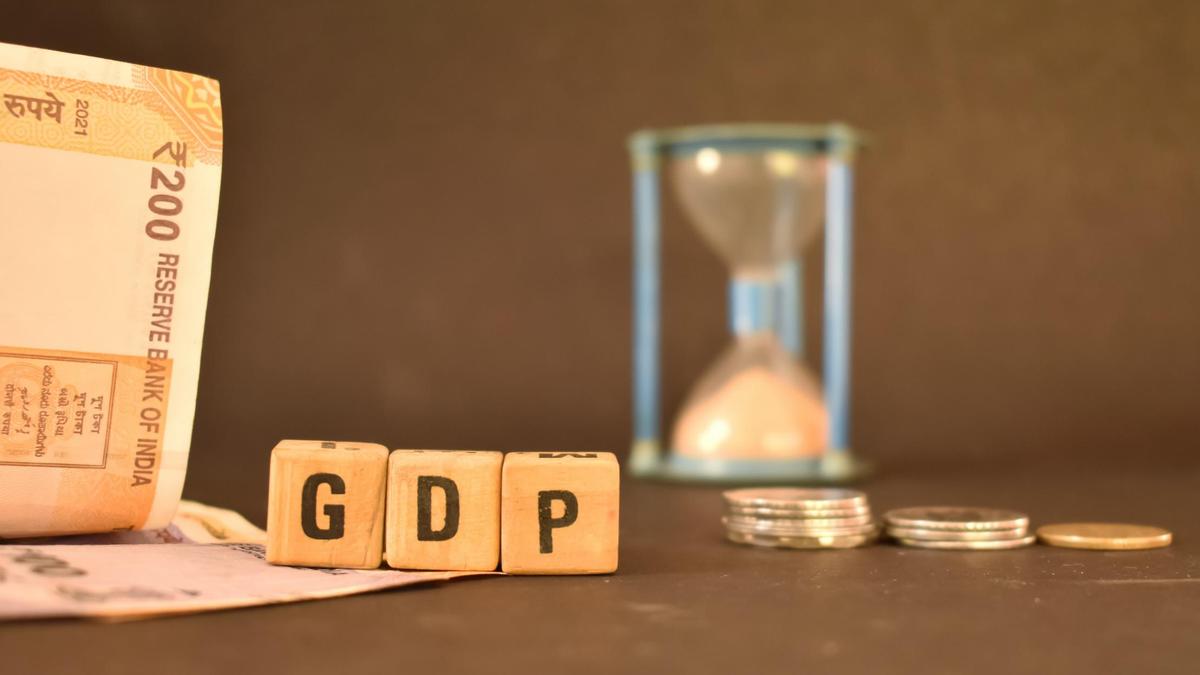

Business Monitor International (BMI) said the currently low level of short-term interest rates following the RBI’s 125 bps rate cut during 2025 will support the economy through the ongoing energy crisis. File
| Photo Credit: Getty Images
“India‘s Gross Domestic Product (GDP) is likely to grow at 6.6% in the current fiscal as compared to 7.7% in FY26, on weaker investments and consumption growth and trade shocks from the West Asia crisis,” Business Monitor International (BMI), a Fitch group company, said.
According to government data released last week, GDP growth in FY26 accelerated to 7.7% from 7.1% in FY25, supported by healthy consumption and robust investment activity.

BMI expects the Rupee to trade in the range of 95.1 against the U.S. dollar this calendar year. It said the Rupee’s depreciation from its 87 average level in 2025 will support export competitiveness, offsetting the drag on GDP from the Iran conflict’s terms-of-trade shock.
The Goods and Services Tax (GST) reforms implemented in September 2025 caused a consumption boom in December quarter FY26. Thereafter, consumption growth fell by 1.1% points to 7.1% year-over-year in March quarter FY26.

“Looking ahead, we continue to expect 6.6% GDP growth in FY2026/27. Our projection represents a visible slowdown from FY2025-26’s 7.7% pace but exceeds India’s average 6.1% per annum growth rate over the last decade,” it said. BMI’s projection is in line with RBI’s 6.6% growth estimates for FY27.
BMI attributed the slow growth rate this fiscal to three factors. First, the impact of last year’s GST reforms on domestic consumption is likely to wane. Also, higher price inflation which BMI expects to hit 5.3% in FY27 will hinder consumption growth amid disruption at Strait of Hormuz.

Thirdly, BMI expects investment growth to slow during the fiscal year. “This slowdown is not due to our new forecast of accumulative 50 basis points (bps) rate hike by the RBI in FY2026/27, since the effect on growth will primarily be felt during FY2027/28.”
BMI said the currently low level of short-term interest rates following the RBI’s 125 bps rate cut during 2025 will support the economy through the ongoing energy crisis.
Published – June 11, 2026 01:43 pm IST
Leave a Reply