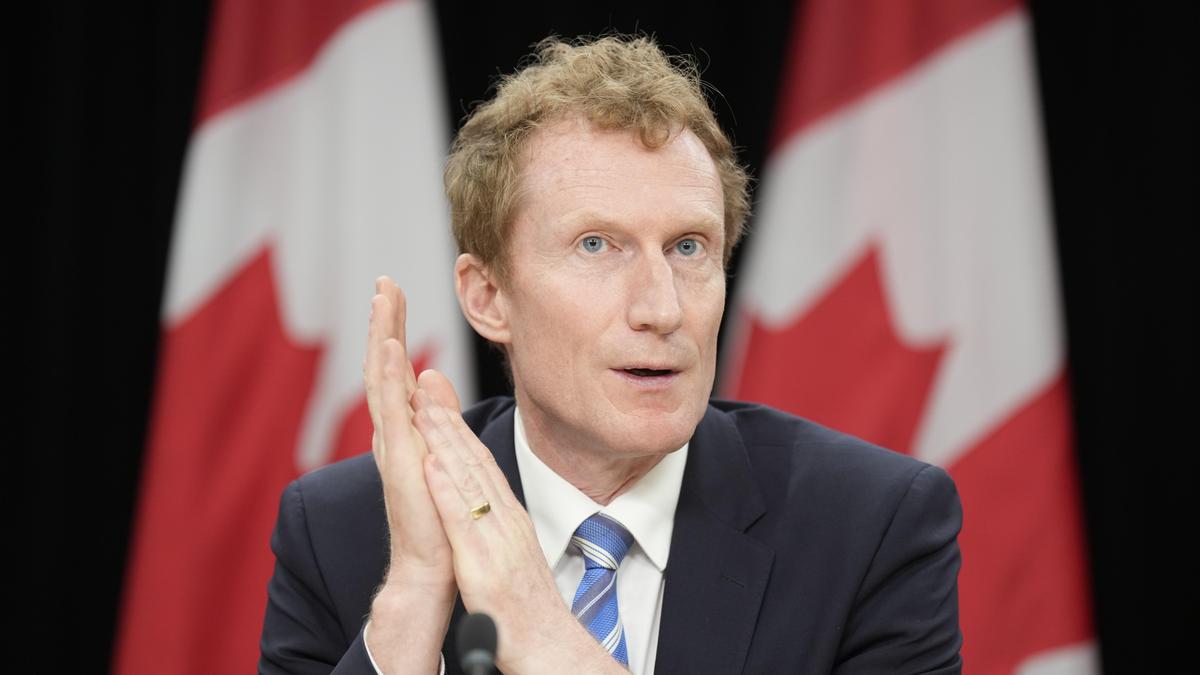
Canada has introduced a Digital Safety Bill that would restrict access to social media platforms for children under the age of 16, while allowing companies to seek exemptions if they can demonstrate adequate safeguards for young users.

Bill C-34, introduced on Wednesday (June 10, 2026) by Canadian Identity and Culture Minister Marc Miller, is the latest attempt by the Canadian government to create a legal framework to address online harms. “The proposed legislation would also regulate artificial intelligence chatbot services, such as ChatGPT, and introduce new safety requirements for online platforms,” according to an official statement.
If passed, the Canadian legislation would also place responsibility on websites to protect children from harmful content, including cyberbullying or harassment carried out through digital platforms. It would make online services more accountable and transparent by introducing new safety requirements for social media services and AI chatbot services, according to the official statement.

The move places Canada among a growing number of countries seeking to strengthen online protections for children. Australia remains the only country to have enacted a nationwide law restricting social media access for under-16s, while countries including the U.K., France, Greece, Spain and Malaysia have considered, proposed or developed similar measures aimed at improving children’s online safety.
Here is what various countries are doing to regulate access to social media amid growing concern over its impact on children’s health and safety.
Australia
Australia has become the first country to prohibit social media access for children under 16, with the rule set to take effect from December 10, 2025. The move blocks minors from platforms such as TikTok, Alphabet’s YouTube, and Meta’s Instagram and Facebook.
Under the new law, ten of the largest platforms have been directed to enforce the restrictions, failing which they could face penalties of up to A$49.5 million ($33 million). The measure has drawn criticism from leading technology firms and free speech advocates, though it has found support among parents and child welfare groups.
United Kingdom
Technology companies in Britain must prevent children from sending and receiving nude images on their devices or face legal compulsion, the government said on Monday (June 8, 2026).
The Home Office said firms such as Apple and Google would be given three months to introduce safety features that block children from capturing and accessing such images on smartphones and tablets.
If they fail to comply, the government will bring in legislation to require them to activate the technology, the department said in a statement.
Earlier, The Times reported on Monday (June 8, 2026), that Prime Minister Keir Starmer was expected to announce a ban on “harmful” online platforms for children under 16, while allowing access to certain safer forms of social media. However, a person familiar with the matter said a formal ban was unlikely to be announced this week.
China
China’s top internet regulator on September 22, 2025, announced a two-month campaign targeting social media platforms, saying it would act against content involving “malicious incitement of conflict” and expressions reflecting a “negative outlook on life”, including sentiments of world-weariness.
Beijing requires social media firms to moderate content on their platforms, with posts subject to strict controls to prevent material considered subversive, vulgar, pornographic or otherwise harmful.

Denmark
The proposal, led by the Ministry of Digitalisation, seeks to fix the minimum age for access to social media. It also allows parents, following a specific assessment, to grant consent for their children to use certain platforms from the age of 13.
France
The two houses of Parliament appear to differ in their approach to the measure, and a compromise may be needed before it can be enacted into law.
Even if adopted, questions remain over its enforceability.
Authorities want the Bill, which also includes a provision to ban mobile phones in high schools, to be implemented from September.
However, the right-leaning Senate, while approving the Bill, did so with reservations and introduced several amendments, a move that could delay its passage through both houses.
A committee in the upper house has instead suggested a two-tier system, distinguishing between platforms flagged as harmful to a child’s “physical, mental, or moral development”, and those that could still be accessed with parental consent.
Germany
Minors aged 13 to 16 may use social media only with parental consent. Child protection advocates have argued that the existing safeguards are inadequate.
“TikTok collects data on Europe’s young people on a very large scale. This data is transferred to servers whose origin is not precisely known,” he said.
Mr. Weimer said there was a lack of clarity over how such data was used, adding that it involved “highly sensitive information relating to Europe’s youth”.
Greece
In a video message addressed to young people, Mr. Mitsotakis said extended screen time does not allow the mind to rest and exposes children to increasing pressure arising from constant comparison and online commentary.
The Prime Minister said he had spoken with several parents who reported that their children were not sleeping well, were becoming anxious more easily and spending long hours on their phones.
India
India is in consultations with social media companies on introducing age-based restrictions, Information Technology Minister Ashwini Vaishnaw said, following steps taken by Australia and other countries to curb access for younger users.
Speaking at a global artificial intelligence conference in New Delhi, Mr. Vaishnaw also called for tighter regulation of deepfakes, while noting that investment in artificial intelligence could reach $200 billion over the next two years.
The government is also considering issuing takedown notices directly to individual users over their social media posts. Under the Information Technology Rules, 2021, such notices could previously be issued only to online news platforms.
Further, any advisories issued by the Ministry of Electronics and Information Technology, if not followed, could affect the “safe harbour” protection available to social media firms, exposing them to legal liability for user-generated content.
Meanwhile, the State governments of Karnataka and Andhra Pradesh have announced restrictions on social media use for children under 16 and under 13, respectively.

Italy
The proposal calls for platforms to stop profiling users by default and to offer greater transparency on how algorithms determine the content shown.
It also seeks to hold platforms accountable for the design of the systems they use to distribute content.
Malaysia
The regulations require social media companies to introduce age verification systems and prevent users below 16 from creating accounts. They apply to platforms with at least 8 million users, including Facebook, Instagram, TikTok and YouTube.
Firms that fail to comply could face penalties of up to 10 million ringgit ($2.5 million). However, parents whose children are able to circumvent the restrictions will not face penalties.
The government said the measures are intended to shield children from harmful content, cyberbullying and features designed to promote excessive use of such platforms.
Norway
“We are introducing this legislation because we want a childhood where children can remain children. Play, friendships and everyday life should not be dominated by algorithms and screens,” Prime Minister Jonas Gahr Store said in a statement.
He said the move was an important step towards safeguarding children’s digital lives.
Indonesia
With this step, Indonesia has become the first country in Southeast Asia to restrict minors from holding accounts on platforms such as YouTube, TikTok, Facebook, Instagram, Threads, X, Bigo Live and Roblox.
The government said the restrictions would be enforced in phases, with full compliance expected from all platforms over time.
Poland
Poland’s ruling party is preparing fresh legislation to bar children under 15 from accessing social media and to make platforms responsible for verifying users’ age, it said on February 27.
Slovenia
Slovenia is drafting a law to prohibit social media access for children below 15, Deputy Prime Minister Matej Arcon said on February 6.
Spain
Technology companies will not influence the Spanish government’s position as it plans to restrict young people’s access to social media, Prime Minister Pedro Sanchez said, accusing “tech oligarchs” of spreading misinformation about the country.
Mr. Sanchez said Spain would ban access to social media for minors under 16, with platforms required to put in place age verification systems.
Sweden
Sweden should introduce a minimum age of 15 for social media use, a government-appointed commission recommended on June 2.
Turkey
Turkey’s parliament on April 24 passed legislation banning social media use for children under 15 and introducing new rules for digital platforms, including gaming companies.
United States
Legislation in the United States aimed at requiring social media companies to strengthen protections for children and teenagers cleared a key hurdle after Republican Senator Ted Cruz said on May 12, 2026 that he would support the measure.
The proposal is separate from the long-standing Children’s Online Privacy Protection Act, which bars companies from collecting personal data from children under 13 without parental consent. Several States have also enacted laws mandating parental approval for minors to access social media, though these have faced legal challenges on free speech grounds.
European Union
The application is expected to be introduced in the coming months and is intended to replace pop-up prompts that ask users to confirm they are over 18 to access adult content.
“This app will allow users to prove their age when accessing online platforms, much like shops require proof of age for the purchase of alcohol,” Ms. von der Leyen said in Brussels.
Leave a Reply