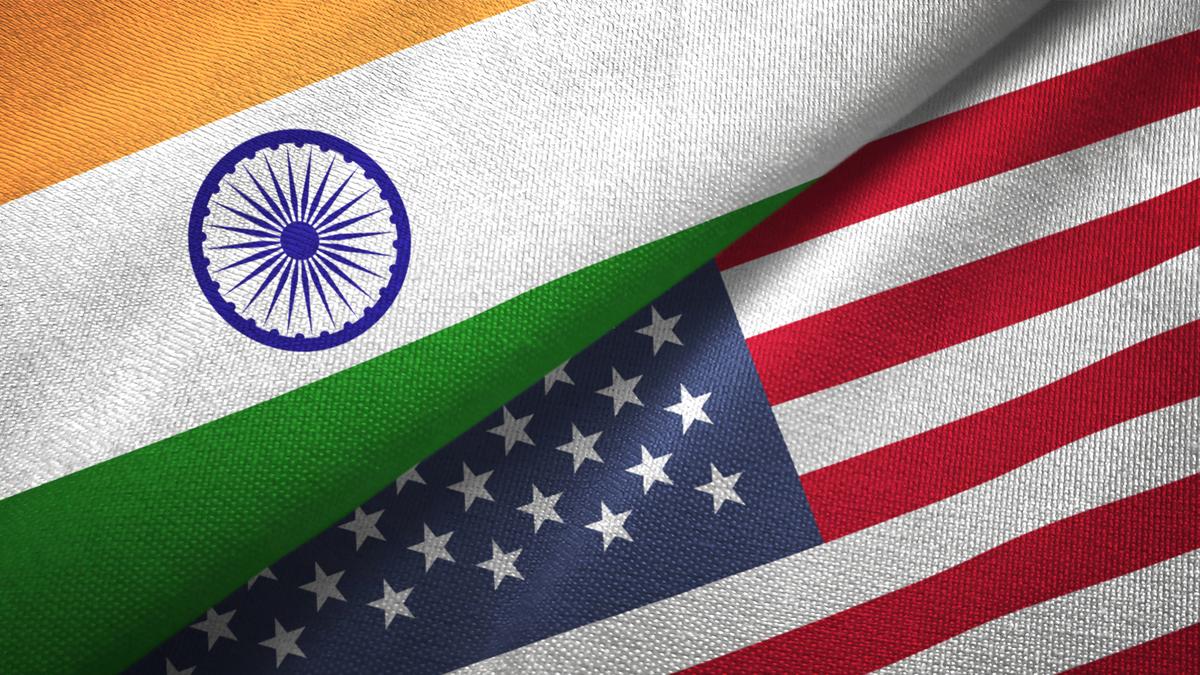
The story so far: India and the U.S. in February 2025 announced that they would work towards a comprehensive Bilateral Trade Agreement (BTA) that was to be finalised by Fall 2025. Then, in February 2026, they signed a framework agreement for an interim trade deal that was to be implemented by April-May 2026. Neither deal has come to pass. The Hindu explains the latest issues that have led to delays.
Why was the BTA delayed?
Soon after Prime Minister Narendra Modi and U.S. President Donald Trump announced their intentions to complete a BTA in February 2025, it became clear that a comprehensive deal would be elusive. The talk among government officials was about finalising at least the first tranche of the deal by Fall 2025 (September-November 2025).

Talks intensified after April 2025 after Mr. Trump first announced his ‘Liberation Day’ reciprocal tariffs and then paused them for 90 days so he could negotiate deals with U.S. trade partners. However, despite several meetings, India and the U.S. could not finalise the first tranche, with key sticking points being India’s reluctance to open up its agricultural and dairy sectors, and its decision to buy oil from Russia.
In two successive announcements in late July and early August, Mr. Trump raised tariffs on imports from India to 25% and then to 50%, with the latter hike being a penalty for India’s Russian oil imports. This decision froze negotiations for a few months before matters thawed once again and talks resumed in October.

What is the interim deal?
Once talks resumed, Mr. Modi and Mr. Trump in February 2026 signed a framework for an interim agreement on trade. This was not a trade deal itself, but the framework along which one could be worked out. At the time, Commerce Minister Piyush Goyal expressed his confidence that the deal would be completed by April, or latest by early May 2026.
Under the framework, the U.S. was to reduce total tariffs on Indian imports to 18%, providing it a competitive advantage over its competitors. Both sides also committed to providing each other preferential market access in “sectors of respective interest”.
Why has this deal been delayed?
Soon after the framework was announced, the U.S. Supreme Court invalidated the reciprocal tariff system itself, saying the law it was based on — the International Emergency Economic Powers Act of the U.S. — did not allow for such tariffs. That removed a major foundation on which the deal negotiations had taken place.

Since then, the U.S. has taken several decisions that have further added to the tariff uncertainty.
Right after the Supreme Court’s decision, Mr. Trump announced that he would be imposing a flat 10% tariff on imports from all countries under the Trade Act of 1974, which he said authorised him to take action to address the U.S.’ ballooning trade deficit. This tariff was temporary, supposed to last 150 days up to July 24. Mr. Trump said he would raise it to 15%, but never did.
The U.S. Court of International Trade deemed these illegal as well, but an appeals court put a stay on that order.
What fresh investigations have added more uncertainty?
In March, the office of the U.S. Trade Representative (USTR) said it had initiated two investigations under Section 301 of the Trade Act into several of its trade partners that could potentially see further tariffs being imposed on them.

The first investigation against 16 economies, including India, was to see whether these economies were using excess manufacturing capacity to export to the U.S. in a manner that was hurting American businesses.
The second one, against 60 countries including India, was to look into whether these countries had taken “sufficient steps” to prohibit the import of goods produced with forced labour and how the “failure to eradicate” these practices impacts U.S. workers and businesses.
Under the forced labour investigation, the U.S. government in early June proposed to levy a tariff of 12.5% on imports from 54 countries, including India, as they have “failed to impose and effectively enforce” prohibitions on the import of goods produced using forced labour. To be sure, this does not mean India uses forced labour, but that it has not stopped the import of goods that have been manufactured using forced labour.
India has made its representations to the U.S. on this matter and the final hearing is on July 7. The findings of the excess capacity investigations are expected in mid-July.
What is India’s stance on the deal?
As repeatedly expressed by Mr. Goyal, India remains committed to finalising a trade deal with the U.S. but is firm about the fact that it should receive a comparative advantage over its competitors as was agreed in February. For this, the Section 301 investigations will have to be completed and the tariffs decided on various countries.
In the meantime, the two sides continue to negotiate on the other non-tariff aspects of the deal, such as enhanced market access, digital trade, supply chain resilience, reduction of non-tariff barriers, and expanded cooperation in strategic sectors. The latest visit by USTR Jamieson Greer to India on June 23-24 did not yield any deadlines.
Published – June 25, 2026 12:22 pm IST
Leave a Reply