Iran said on Wednesday (May 20, 2026) it was examining the latest U.S. proposal received from mediator Pakistan in talks to end the West Asia war, despite the two sides trading threats over resuming attacks.
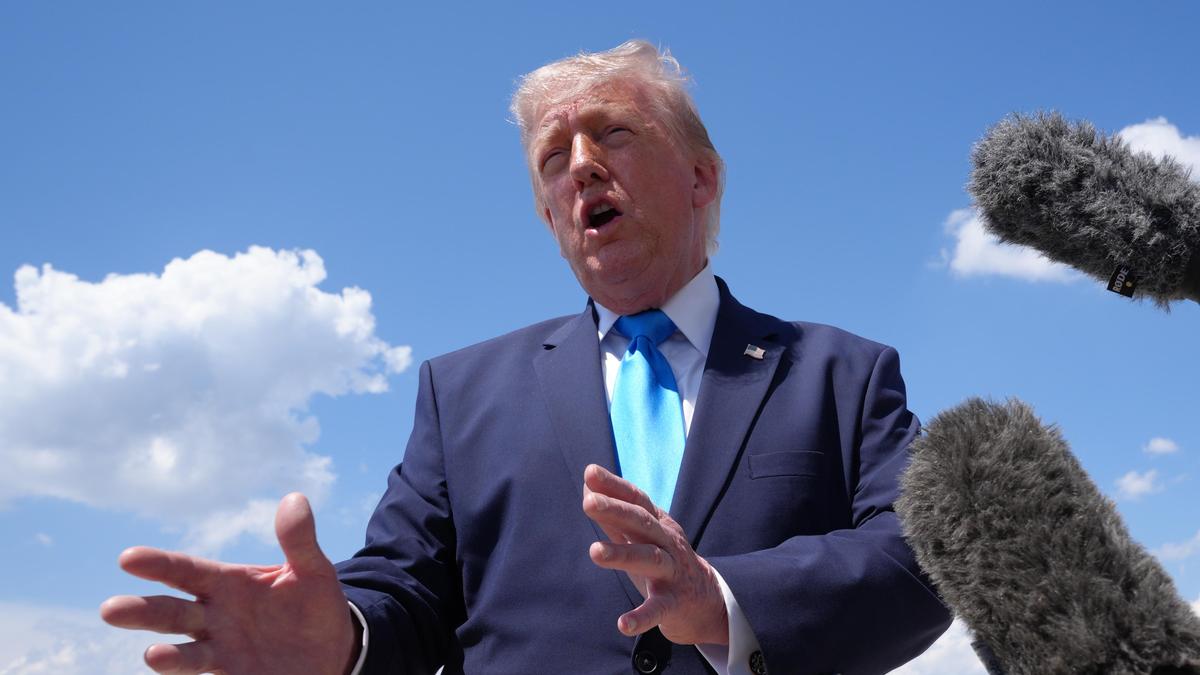
It came after U.S. President Donald Trump told reporters that Washington was in the “final stages” of negotiations with Iran.

“We’ll either have a deal or we’re going to do some things that are a little bit nasty. But hopefully that won’t happen,” Mr. Trump said.
“I’m in no hurry. I just, ideally, I’d like to see few people killed, as opposed to a lot,” he added.
Iran’s Foreign Ministry spokesman Esmaeil Baqaei said the Islamic Republic had “received the points of view of the American side and we are currently examining them”.
He reiterated Iran’s demands, including the release of Iranian assets frozen abroad and an end to the U.S. blockade on Iranian ports.

Tehran’s chief negotiator, Mohammad Bagher Ghalibaf, had said earlier that the United States wanted to restart the West Asia war, after Mr. Trump said he would attack again unless Tehran agreed a peace deal.
Mr. Ghalibaf, who warned of a “forceful response”, was speaking after Iran’s Revolutionary Guards said any renewed war would spread far beyond the West Asia.
“The enemy’s movements, both overt and clandestine, show that despite economic and political pressure, it has not abandoned its military objectives and is seeking to start a new war,” Mr. Ghalibaf said.
‘Give diplomacy a chance’
A ceasefire on April 8 brought a halt to the U.S.-Israeli conflict with Iran, which has roiled the global economy, but with Washington and Tehran seemingly reluctant to resume the fighting, a war of words has taken its place.
Mr. Trump has repeatedly threatened Tehran with renewed military action, while Iranian officials have hit back with their own warnings.

The Revolutionary Guards said on Wednesday (May 20, 2026): “If the aggression against Iran is repeated, the promised regional war will this time spread far beyond the region, and our devastating blows will crush you.”
Nevertheless, despite sporadic bursts of violence, the two countries have continued to take part in diplomatic exchanges, mediated by Pakistan, aimed at bringing a formal end to the war.
Citing diplomatic sources, Iran’s official IRNA news agency announced a visit to Tehran by Pakistan’s Interior Minister, his second in less than a week.
Global oil prices fell more than five percent on Wednesday (May 20, 2026) on hopes of a deal.
Saudi Foreign Minister Prince Faisal bin Farhan praised Mr. Trump on Wednesday (May 20, 2026) for his decision to “give diplomacy a chance” and urged Iran to seize “the opportunity to avoid the dangerous implications of escalation”.
Israel’s army chief Lieutenant Colonel Eyal Zamir, meanwhile, said the military was at its highest alert level “and prepared for any development”.
Under pressure
Mr. Trump is under pressure, with rising energy costs beginning to bite at home.

While the ceasefire brought a halt to the fighting, it has not reopened the vital Strait of Hormuz, through which a fifth of the world’s oil and liquefied natural gas usually pass.
Iran’s Revolutionary Guards navy on Wednesday (May 20, 2026) said they allowed 26 vessels, including oil tankers, to transit the Strait of Hormuz over the previous 24 hours, after “coordination and security provided by the IRGC navy”.
The United States has imposed its own blockade on Iranian ports, and U.S. Central Command said Marines had boarded an Iranian-flagged oil tanker on Wednesday (May 20, 2026) in the Gulf of Oman that was suspected of attempting to violate the blockade.
“American forces released the vessel after searching and directing the ship’s crew to alter course,” CENTCOM said on X.
It said U.S. forces have now redirected 91 commercial ships to ensure compliance with the blockade.

The future of the Hormuz strait is a key sticking point in negotiations, but without a deal fears are growing for the global economy as pre-war stockpiles of oil are used up.
The strait is also a conduit for around a third of global fertiliser, the loss of which is pushing up food prices and could cause shortages.
On Wednesday (May 20, 2026), the UN’s Food and Agriculture Organization warned of “a severe global food price crisis” and a “systemic agrifood shock” from the closure of the strait.
Published – May 21, 2026 01:21 am IST
Leave a Reply