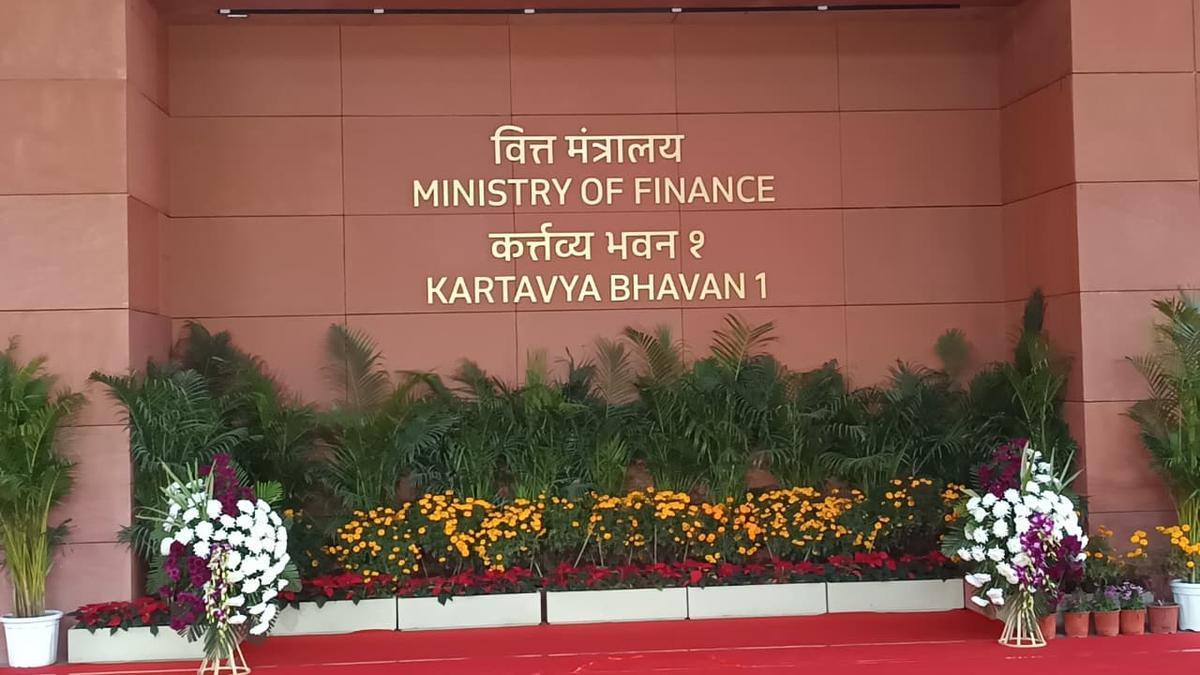

The Monthly Economic Review by the Department of Economic Affairs further said that this resilience of remittance inflows is consistent with what happened during previous crises such as the COVID-19 pandemic. File
| Photo Credit: The Hindu
Despite the West Asia crisis, net remittances from the region to India rose to $16 billion in April 2026, the second month of the conflict, up 70% over the same period of last year, according to data presented by the Ministry of Finance in its latest report.
The Monthly Economic Review by the Department of Economic Affairs further said that this resilience of remittance inflows is consistent with what happened during previous crises such as the COVID-19 pandemic.
“Contrary to concerns that geopolitical tensions in the West Asia region could adversely affect remittance inflows from the Gulf economies, transfer receipts have remained robust,” the report said. “This resilience is consistent with empirical findings that remittances are among the most stable components of external financing, remaining relatively insulated from episodes of financial market volatility and geopolitical uncertainty.”

An analysis included in the report found that remittances have historically been among the most stable components of external financing.
“Empirical evidence shows that, unlike portfolio flows, debt flows or foreign direct investment, remittance inflows are relatively acyclical and tend to remain resilient during episodes of financial market volatility and geopolitical uncertainty,” the report said.
This resilience, it went on to say, comes about because remittances are flows of funds driven by employment conditions and wage levels in host economies rather than by financial market signals or investor sentiments. That is, remittances from the Gulf countries are more anchored to the working conditions there than the stock market performance in India.
However, this also leads to what could be a risk in the medium and long-term if the war-like conditions in the region do not abate.
“The principal risk to remittance inflows, however, arises from a sustained deterioration in labour market conditions in host economies that affects migrant employment and earnings,” the report said. “Consequently, while short-term external shocks may have limited effects on remittance inflows, developments in overseas labour markets warrant close monitoring in the current context.”
Published – June 30, 2026 07:02 pm IST
Leave a Reply