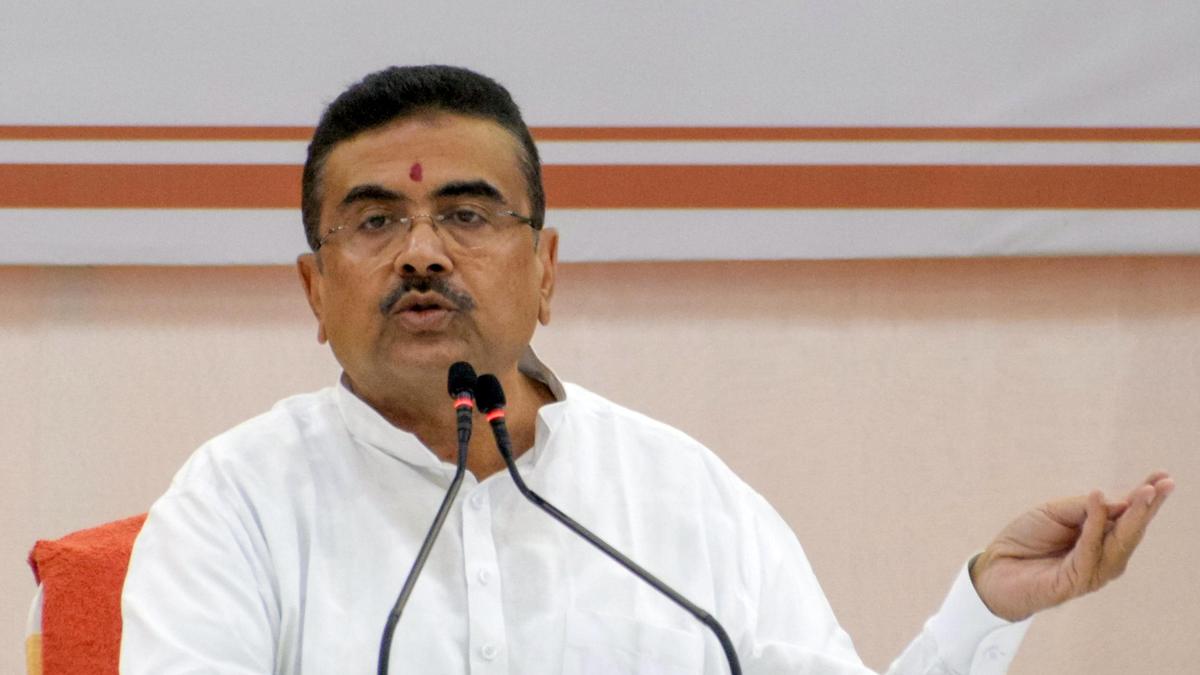
In the last week of July 2026, the Bharatiya Janata Party government in West Bengal stripped the elected heads of panchayats of administrative and financial powers. On July 23, 2026, a notification by the State government stated that gram panchayat pradhans and municipal chairpersons will transition out of their previous roles as registrars regarding birth and death registrations. The Suvendu Adhikari government said that dedicated government officers will now be appointed as registrars for every gram panchayat and municipality to streamline record-keeping of birth and death certificates and administrative workflows.
The very day the notification was issued, the State’s Chief Secretary, Manoj Agarwal, held a press conference stating that there were irregularities in the issuance of birth certificates during the Special Intensive Revision (SIR). The police held raids at several municipalities and civic bodies, where it seized birth and death records.
The West Bengal government’s argument for the move was to ensure transparency in public service and to stop corruption in the issuance of birth and death certificates. Birth and death certificates have been a contentious issue in the State, particularly after an SIR, which removed about 12% of voters in West Bengal. Since the newly elected government has decided to make it a priority to identify and deport Bangladeshi infiltrators, having officials have a say over birth and death certificates appeals to the State government more than elected public representatives.
Depriving elected panchayat heads of financial powers
The West Bengal Legislative Assembly on Saturday (July 25, 2026) passed the West Bengal Panchayat (Second Amendment), 2026 Bill, depriving elected representatives of panchayats of financial powers.
The legislation seeks to amend several provisions of the West Bengal Panchayat Act, 1973, with Section 6 transferring cheque-signing and financial disbursement rights from elected gram pradhans to panchayat secretaries, executive assistants, and block development officers. The statement of objects and reasons of the Bill stated that the legislation was brought to ensure stability of panchayat bodies for the time-bound delivery of services to the public at large.
Participating in the discussion on the bill, Panchayat Affairs and Rural Development Minister Dilip Ghosh said the legislation does not intend to curtail the constitutional powers of elected panchayat heads.
“Rather, it is aiming at curtailing the authority for corruption and commission against rural civic services. Henceforth, the elected panchayat heads will only approve any proposal. But the bill (financial bills/cheques) will be cleared and sanctioned by the bureaucrats,” he said.
The State Panchayat Minister alleged that in many instances, pradhans have refused to sign work-related documents due to issues regarding alleged ‘cut-money’ (kickbacks). He stated that the objective of the amendment is to curb such irregularities. Mr. Ghosh claimed that among all States in the country, it is only in West Bengal that panchayat pradhans possess such financial powers, and that economic interests have been a major factor behind the violence witnessed during panchayat elections.
W.B. among the first to have a three-tier panchayat system
West Bengal was among the first States in the country to implement a three-tier panchayat system. Almost two decades before the 73rd Constitutional Amendment of 1993, which officially gave constitutional status to the panchayati raj system in rural India, establishing a uniform three-tier local government structure, West Bengal had in 1973 passed a panchayat act, and the first panchayat elections were held in June 1978, allowing political parties to officially contest at the local level. The system was hailed as a decentralised model of local self-government where panchayats were considered an extension of the State. With welfare schemes delivered at the panchayat level, gram panchayat members and pradhans gained enormous power. The control over local panchayats meant control over resources of the State.
Corruption and violence at panchayat level
With panchayats playing a crucial role in the delivery of public services, corruption and violence slowly crept in. The last panchayat elections in West Bengal, held in 2023, witnessed widespread violence, with inter-party and intra-party clashes resulting in over 50 deaths. The previous elections during the Trinamool Congress and Left Front regimes also witnessed large-scale violence. The control over local resources and area domination by holding power in panchayats had become a hallmark of rural societies in West Bengal.
The control over resources led to corruption at the panchayat level. The fall of the Trinamool Congress regime had brought to the fore widespread corruption at the panchayat level. The gram pradhan and elected panchayat representatives used to charge ‘cut-money’ or kickbacks for the delivery of services. The widespread public anger against the pradhans and elected members of panchayats after the change in the regime reflected the corruption and rut in the system.
The politics behind powers being curtailed
After the BJP victory in the West Bengal Assembly elections 2026, the space occupied by the Opposition, particularly the Trinamool Congress, has crumbled. 20 of the 28 MPs have joined the nationalist Citizens Party of India (NCPI), and 65 of the 80 MLAs have split, claiming themselves to the real Trinamool Congress.
What has largely remained untouched by the defections is the three-tier panchayat system in West Bengal comprising 3,317 gram panchayats with 63,000 elected members, 341 panchayat samitis with over 9700 elected members, and about 20 zilla parishads with 970 members. Almost 90% of the elected representatives at the three — tier panchayats are Trinamool Congress representatives. A significant majority of them have stopped performing their responsibilities, fearing public anger and that they might be booked in corruption cases.
The next panchayat election will be held in 2028. Therefore, the BJP government has decided to allocate administrative and financial powers to officials instead of elected gram panchayat heads, a move that will increase bureaucratic intervention in the decentralised model of local self-governance.
Published – July 28, 2026 11:13 am IST
Leave a Reply