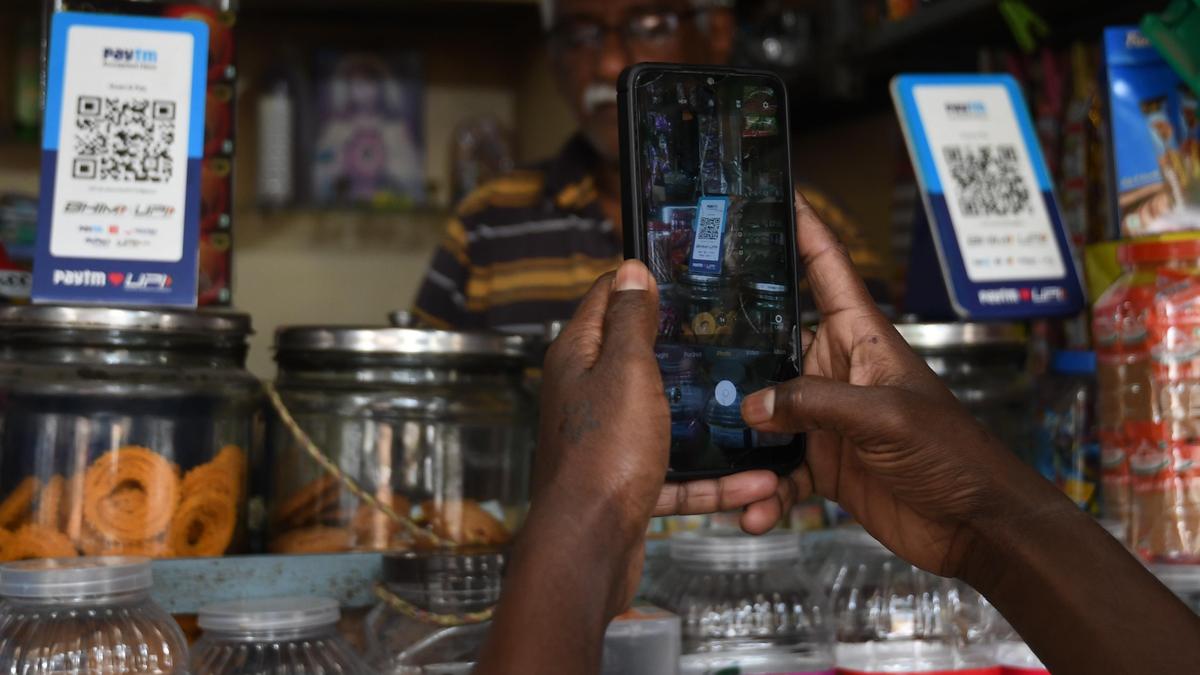
The government has just given itself the legal room to tax the very payment habit it spent a decade building. Tucked into the Taxation and Other Laws (Amendment) Bill, 2026, is an amendment to Section 10A of the Payment and Settlement Systems Act, 2007, which would allow the government to notify charges on specified electronic payment modes. The number being proposed is a Merchant Discount Rate (MDR) of 0.25–0.5% on UPI transactions above ₹2,000. The official stand is that this threshold would touch only about five per cent of transactions by volume, sparing the milk-and-vegetable payments that make up the bulk of UPI’s use. But it would cover roughly 65% of transaction value, which is precisely why it matters.
This is not a small, technical fix. It runs counter to a decade-long policy commitment and deserves more scrutiny than it has received.
The policy reversal
Consider the arc. Demonetisation in November 2016 was justified, among other things, as a push towards a less-cash economy. UPI, launched earlier that year, became the vehicle for that push, and its zero-MDR regime was a deliberate subsidy to get merchants and consumers off cash. It worked spectacularly. UPI now processes more transactions each month than most of the world’s card networks combined. Having successfully weaned the country away from cash and towards electronic payments, the government now wants to undercut the very success it engineered.
There seems to be a continued pattern of privileging one payment mode over others via policy. India has long taxed even credit cards. Credit card interest and fees attract 18% GST, making the use of credit cards unnecessarily costly. Taxing interest on revolving credit is unusual by international standards; most jurisdictions treat consumer credit interest as a private financial cost, not a taxable service. India taxes it as if using a credit card itself is a luxury.
Now UPI, the payment rail the government spent political capital promoting, is in line for similar treatment. The pattern suggests a need for a more coherent payments policy than giving in to the temptation to tax every transaction that can be observed.
There are at least two problems with this specific move beyond the optics.
Who really pays?
First, basic economic theory tells us that the person on whom a tax is levied and the person who actually bears its cost are not always the same. Moreover, UPI or any payments interface is a two-sided market, and taxing two-sided markets is genuinely tricky.
The MDR would nominally fall on merchants, as argued by the government, collected via banks and the National Payments Corporation of India’s ecosystem. But whether that cost gets passed through to merchants, on to consumers, or absorbed by banks and payment service providers depends on competitive intensity on each side of the market. Banks and fintechs compete for merchant relationships and cannot easily raise prices without losing volume to a rival offering free UPI acceptance.
The more likely outcome is that intermediaries — the banks and PSPs that built and maintain the plumbing — absorb the cost, which erodes their incentive to invest in reliability, fraud prevention and expansion into underserved segments. A tax that cannot be reliably passed through does not disappear; it most likely shows up later as degraded service or slower innovation. This is completely counterintuitive if government is proposing this tax as necessary to fund the next stage of UPI growth.
Cost to inclusion
Second, UPI has done real work on financial inclusion at the margin. It has pulled informal transactions into a recorded, traceable digital trail — the very outcome that formalisation and tax-compliance advocates have wanted for years. There have also been attempts to provide credit based on the digital trail created by electronic payments. Every rupee that moves through UPI instead of cash is a rupee the financial institutions can eventually see and use to build a spending profile.
Charging the rail directly could undercut the incentive to use it, cutting against long-standing financial inclusion goals. The government does not need to raise revenue from every rupee that moves electronically; it needs those rupees to keep moving electronically, because that is what delivers the inclusion and compliance dividends it has been chasing since 2016.
Ideally, which payment mode to adopt should be an economic decision for participating actors. Factors such as the size of the business, consumer preferences, and relative cost of using alternative payment systems should determine their usage. Deliberate policy intervention and the current government’s war on cash tilted the scales in favour of UPI. Taxing it now — however nominal or small — could change its usage patterns, and policymakers should not be surprised if one outcome is reduced UPI usage.
The proposal is being dressed up as a modest, targeted measure affecting only large-value transactions. But modest measures on payment rails have a way of expanding once the legal architecture exists. Section 10A, once amended, does not expire when this particular MDR proposal is shelved. The better outcome is for the government to leave the payments system alone, let UPI’s network effects keep compounding, and find its revenue elsewhere.
(Parag Waknis, Professor & Head, Economics Department, SRM University AP)
Published – August 11, 2026 08:30 am IST
Leave a Reply