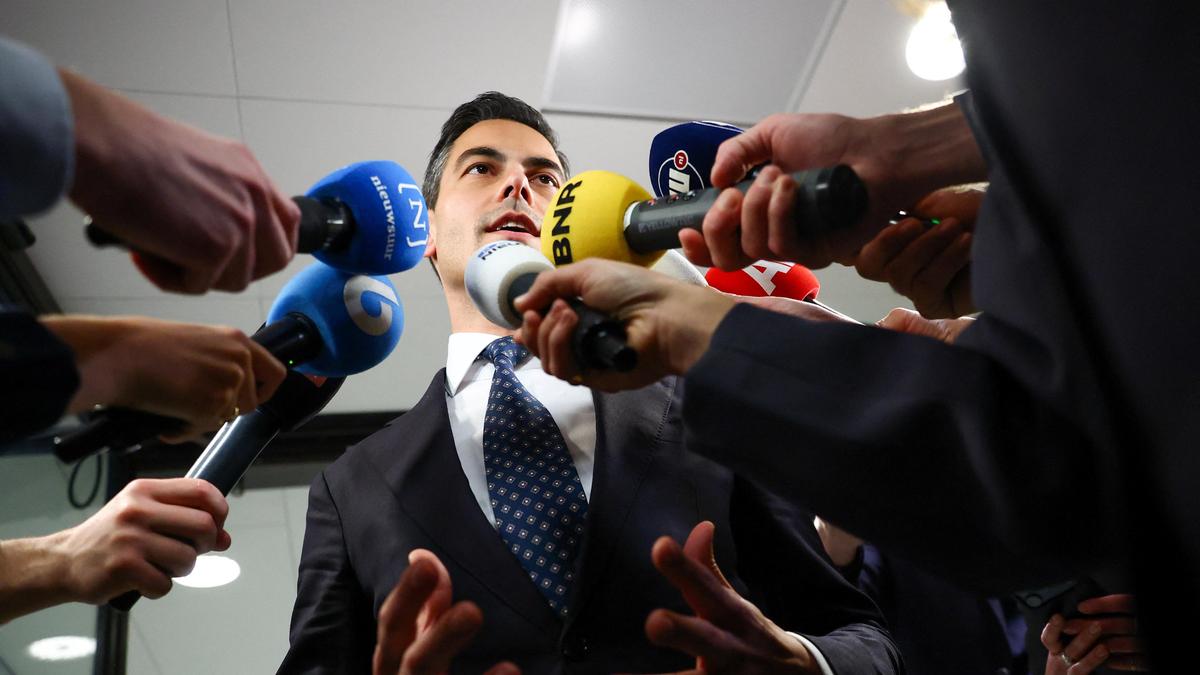

Dutch Prime Minister Rob Jetten speaks to members of the media after the Dutch parliament voted on the government’s 2027 tax plan, which has threatened to cause a government crisis as coalition parties are divided over a proposal that would increase wealth taxes, in The Hague, on November 12, 2026.
| Photo Credit: Reuters
Story so far: The Dutch government came close to a collapse this week over its Tax Plan for 2027 as members of the three-party ruling coalition disagreed over an amendment to the plan. Though the plan was passed in the lowest-possible majority in the House of Representatives on Thursday (November 12, 2026) night and the government subsequently defeated a no-confidence motion, the developments have brought a rift in the coalition out in the open and threaten the future of the government led by Rob Jetten just nine-months into its 4-year term.
The Netherlands currently has a minority government by a coalition of three parties holding 66 seats in the 150-member Tweede Kamer, the lower house. The centrist D66 led by Prime Minister Jetten, the youngest premier in the country’s history, is the single largest party with 26 seats and is joined by centre-right parties People’s Party for Freedom and Democracy (VVD) and Christian Democratic Appeal (CDA), with 22 and 18 seats respectively. The government came to power in February, 117 days after a snap election in October last year necessitated by the collapse of Dick Schoof’s right-wing government as far-right leader of Freedom Party Geert Wilders withdrew his support. The months following the election that failed to produce a clear winner saw parties across political spectrum and ideologies negotiate to form a government to no effect, paving the way for the centrist parties to make do with a minority administration.
Published – November 13, 2026 09:33 am IST
Leave a Reply