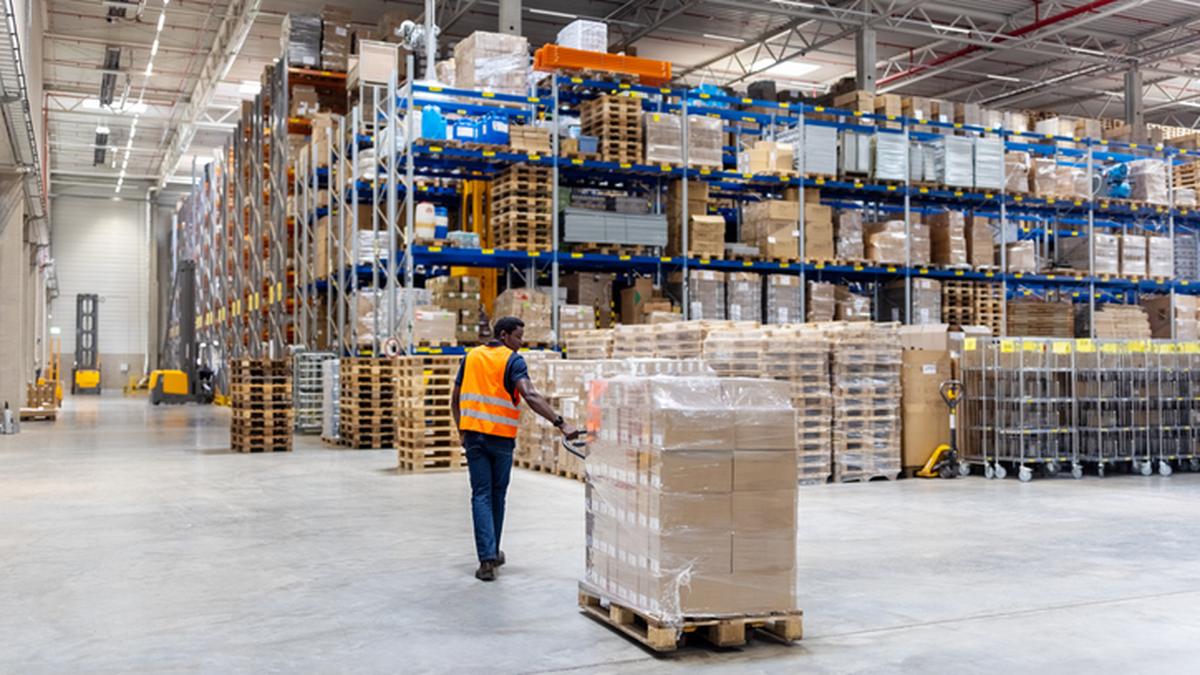

Representative image.
| Photo Credit: Getty Images/iStockphotos
The government of India has issued a notification banning the import of goods manufactured using forced labour, a significant step towards clearing the path towards the signing of an interim trade agreement with the U.S.
The U.S. is currently in the process of releasing its final decision on the tariffs it plans to levy on countries that it says have not done enough to stop the import of goods made using forced labour.

“The import of goods produced or manufactured, wholly or in part, through the use of forced labour is prohibited,” the Ministry of Commerce and Industry said in its notification.
It added that the Central Government may, from time to time, specify the goods whose import shall be prohibited under this paragraph.
“The procedure for conducting an enquiry by the Director General of Foreign Trade into the use of forced labour in the production of such goods shall be as prescribed in the Handbook of Procedures, 2023,” the notification added.

Under its draft proposal following an investigation, the U.S. found that India and 53 other countries “failed to impose and effectively enforce” prohibitions on the import of goods produced using forced labour. As such, it proposed a tariff of 12.5% on imports from these countries.
Commerce Secretary Rajesh Agrawal confirmed on Monday (July 13) that India has made its submissions to the U.S. on the matter and has protested the tariffs.
This pending decision has led to significant uncertainty surrounding the India-U.S. trade deal, with Commerce Minister Piyush Goyal and Mr. Agrawal separately saying that India will sign a deal only once it is established that it will receive a comparative advantage over its competitors.
One key factor in establishing this comparative advantage is to see what tariffs the U.S. plans to levy under its various investigations. The second investigation is into whether the U.S.’ trade partners are using excess capacity to export to the U.S. to the detriment of the American economy. The draft report of that investigation has not been released as yet.
According to the notification by the Commerce Ministry, ‘forced labour’ means “all work or service which is exacted from any person under the menace of any penalty and for which the said person has not offered himself voluntarily, as defined under the ILO Forced Labour Convention, 1930 (No. 29)”.
According to Manoj Mishra, Partner and Tax Controversy Management Leader, Grant Thornton Bharat, the introduction of a prohibition on imports of goods produced through forced labour marks a significant policy shift in India’s trade framework.
“While India has so far relied largely on labour and criminal laws to address forced labour domestically, the Foreign Trade Policy now incorporates a dedicated trade measure aligned with international standards under the ILO Forced Labour Convention,” Mr. Mishra said.
“Announced amid heightened global scrutiny of supply chains and the ongoing U.S. Trade Representative Section 301 investigation, the move strengthens India’s regulatory framework on ethical sourcing,” he added.
However, Mr. Mishra also pointed out that the practical impact of the measure would largely depend on the enquiry mechanism and implementation framework that the government said it would lay out in the Handbook of Procedures.
Published – July 14, 2026 05:20 pm IST
Leave a Reply