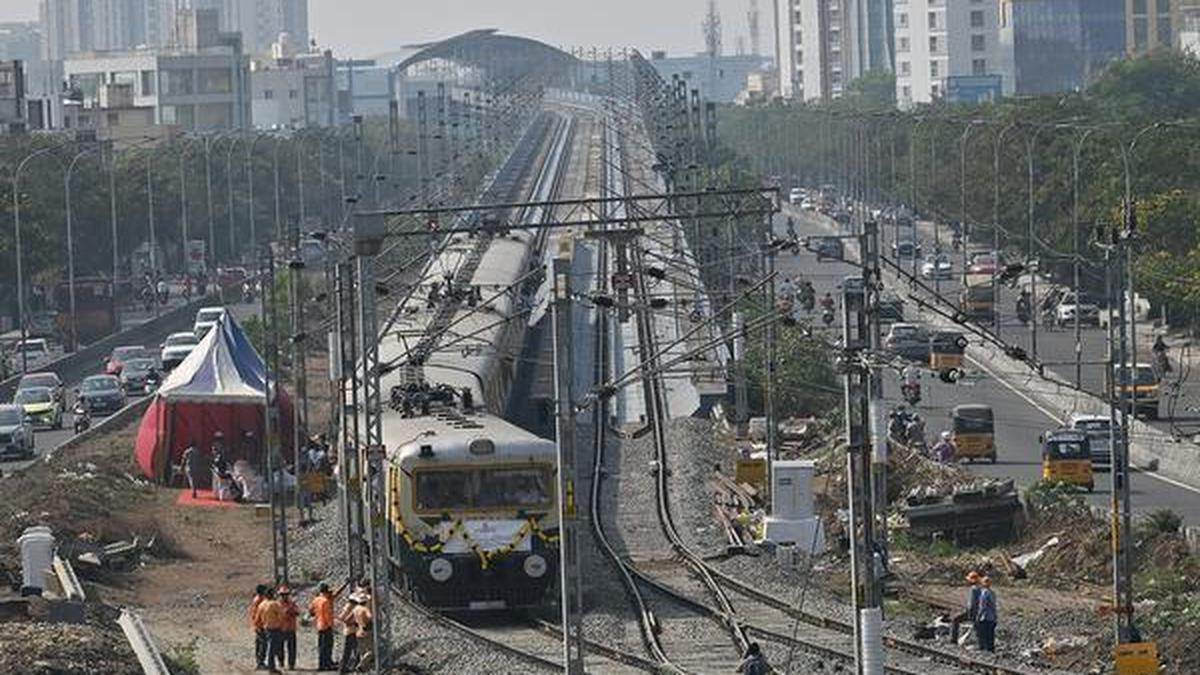

The Railway Board has instructed that a suitable location in the vicinity of the accident site be identified exclusively for use by the Inquiry Committee.
| Photo Credit: B. VELANKANNI RAJ
Senior railway officers probing train accidents have been directed to camp at accident sites to expedite investigations and ensure that inquiry reports are completed within the prescribed time frame.
According to railway sources, a safety review of accident investigations conducted by the Railway Board found that several accident inquiries and related departmental proceedings had not been finalised within the stipulated deadlines.
The review pointed to delays in constituting inquiry committees and the diversion of officers assigned to the investigations for other official duties as the primary reasons for prolonged inquiries.
To facilitate the timely completion of investigations without compromising the quality of inquiry, the Railway Board has instructed that, immediately after an accident, a suitable location in the vicinity of the accident site be identified exclusively for use by the Inquiry Committee.
“This will enable all members of the Committee to work in coordination, focus on the investigation, examine the available evidence expeditiously, and finalise the inquiry report in continuous sittings, as far as practicable,” the Railway Board said in a communication to the General Managers of all Zonal Railways.
Senior officers have also been directed to review all pending accident inquiries and take necessary steps to ensure that they were completed without further delay.
Under the existing norms, an Inquiry Committee must be constituted on the day following an accident, and its report submitted to the competent authority within seven days. The process of accepting the report, implementing its recommendations, and initiating departmental action, wherever human error is established, was required to be completed within 90 days.

Focus on ‘Why’, not ‘Who’
Reiterating its earlier instructions, the Railway Board observed that inquiries into accidents have often focused on identifying “who” was responsible, rather than examining “why” the accident occurred.
It noted that inquiry reports have generally been more concerned with fixing accountability than undertaking a detailed analysis to identify the root causes of accidents.
The Railway Board emphasised that every post-accident inquiry should be followed by a Detailed Accident Study and Analysis Report, clearly identifying the root causes of system and human failures. The report should also recommend appropriate technical and procedural measures to prevent similar failures and enhance operational safety.
Published – August 08, 2026 10:34 am IST
Leave a Reply