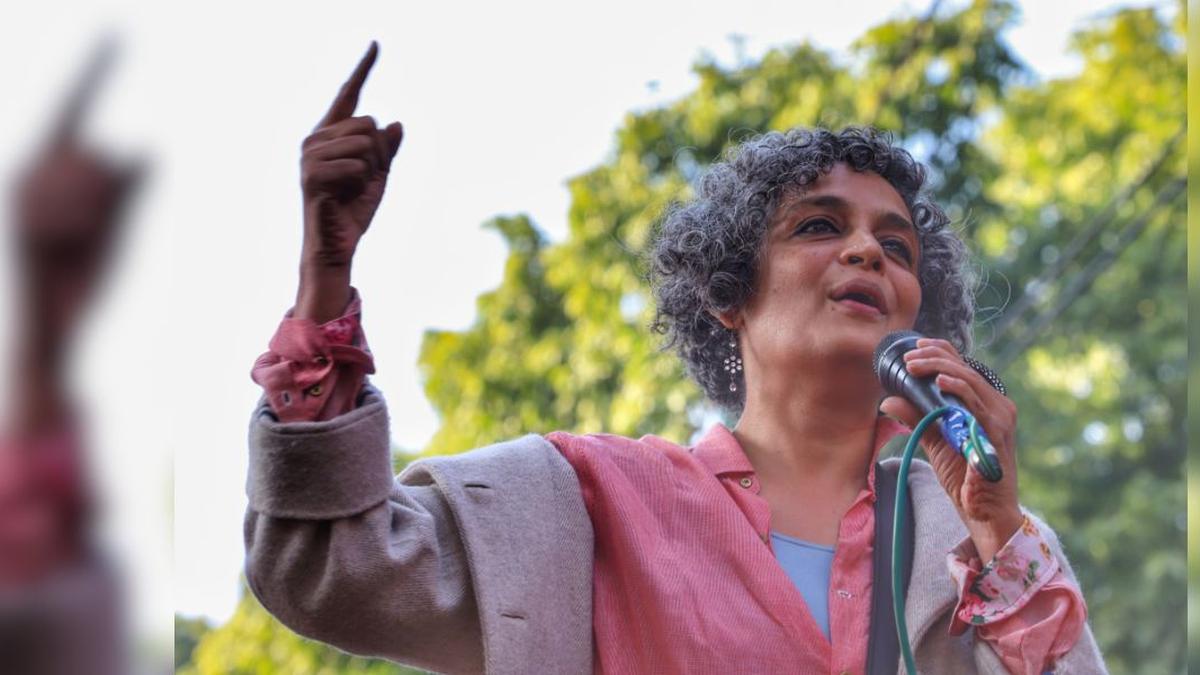

Q: What has changed now? How is today’s young India different from before? Is this CJP-student protest akin to the JP Movement of the 1970s in any way?
 Arundhati Roy: I think the protest has grown beyond the demands of the students. [Union Education Minister] Dharmendra Pradhan is small potatoes now. These young students have reclaimed what their parents’ generation gave up. India’s dignity. With their grace, courage and humour they have shown us how not to be afraid. It’s a gift. It’s up to us to use it well. And no, I don’t think it’s like JP’s movement at all. It’s its own unique thing, and still a developing story. But I think it’s exhilarating.
Q: The country has also been seeing other kinds of protests: from the ‘Chita Andolan’ of the Adivasis against the Ken-Betwa river linking project in Madhya Pradesh, to the environmental protests from Uttarakhand to the Great Nicobar Island, and Ladakh’s statehood protest, among others. Could all these together galvanise into something bigger?
Arundhati Roy: Well, while all these movements are happening, we are also being pushed to the wall. The SIR [Special Intensive Revision] is the CAA-NRC in disguise. From fighting for our land, for our right to food and information, we are now fighting for our right to vote. For our citizenship, which [German-American historian and philosopher] Hannah Arendt said was “the right to have rights”. It’s the Hindu Rashtra version of the 1935 Nuremburg laws where the Nazi government conferred citizenship based on ‘legacy papers’ generated by itself. This government doesn’t care about protest because it has captured the election machinery and feels it has the money and the might never to lose an election. But the Cockroaches could mark the beginning of the end of this regime. But spontaneous anger isn’t enough. We need adults and political organisations to step in.
Leave a Reply