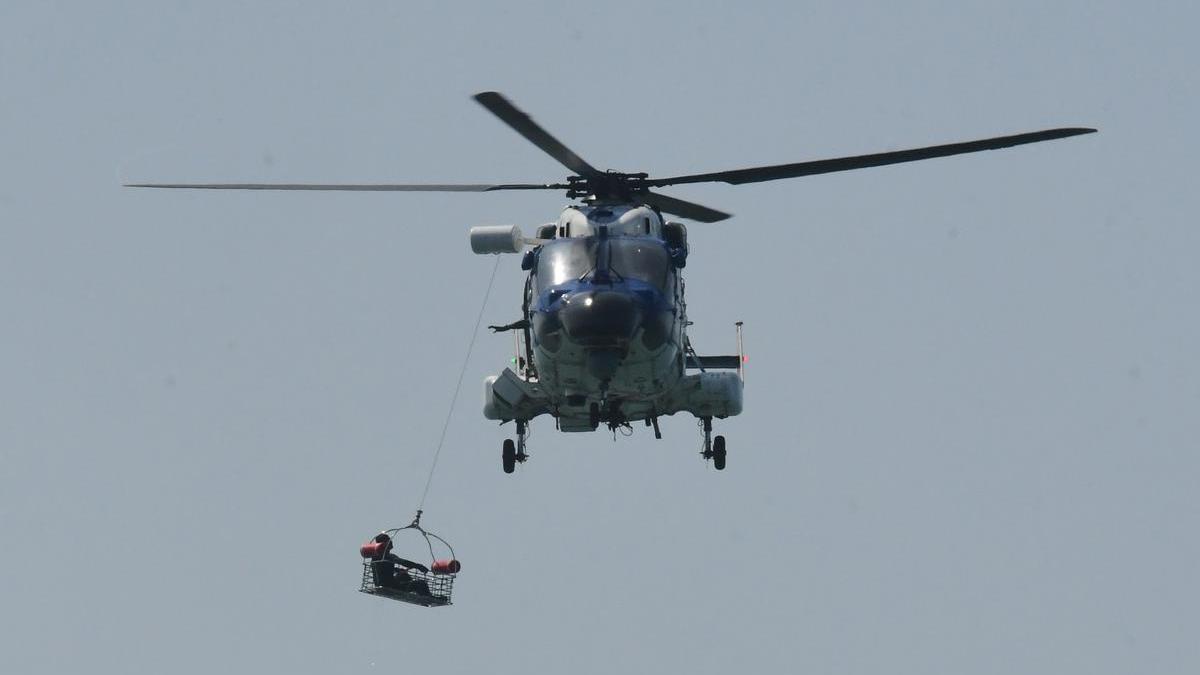
The Union Government’s decision to introduce permanent career opportunities and retirement benefits for women officers in the Indian Coast Guard (ICG) marks another significant milestone in India’s journey towards gender parity in the uniformed services. The reforms, approved by Defence Minister Rajnath Singh, not only address a long-standing demand of women Coast Guard officers but also bring the maritime force closer to the standards already established in the Indian Army, Indian Navy and Indian Air Force (IAF).
The policy change comes nearly two years after the Supreme Court questioned the Ministry of Defence and the Coast Guard over the continued denial of Permanent Commission to women officers despite similar reforms having been implemented in the three armed services following landmark judicial interventions.

While the Army, Navy, and Air Force have each travelled different paths towards integrating women into mainstream military roles, the Coast Guard has until now lagged behind in providing long-term career progression. The latest reforms seek to bridge that gap.
What has changed in the Coast Guard?
The new policy introduces two major reforms for women officers serving under the Short Service Appointment (SSA) scheme.
First, women officers will now be eligible for Permanent Absorption in the General Duty (GD) cadre, allowing them to pursue a full career in the service rather than leaving after completing their short-service tenure. Earlier, women could serve only for a limited period under the SSA scheme, while many male officers had the option of permanent appointments.

Second, all branches of the ICG have now been opened to women officers, enabling them to perform all duties on a par with their male counterparts. Women officers will now also be entitled to pension and retirement benefits on a par with their male counterparts.
These changes are expected to improve the retention of trained personnel, provide greater financial security and encourage more women to consider the Coast Guard as a long-term career.
The Indian Coast Guard has inducted women officers for more than three decades, but their career progression remained restricted compared with that of the armed forces.
Women officers have served in operational support, logistics, law, education, administration and selected maritime operational roles.
However, the absence of Permanent Commission created uncertainty regarding promotions, leadership opportunities and retirement security.
The reforms also align with the government’s broader effort to expand women’s participation across India’s defence establishment and recognise merit over gender in determining career opportunities.
Among the three armed services, the Indian Army has witnessed the most significant legal transformation on gender equality.
For decades, women officers were inducted only through the Short Service Commission (SSC) and largely confined to support arms such as Signals, Engineers, Army Air Defence, Army Service Corps, Intelligence Corps, Judge Advocate General and Ordnance.

The turning point came in 2020 when the Supreme Court directed the Government to grant Permanent Commission to eligible women SSC officers, ruling that gender-based discrimination in career progression was unconstitutional.
Today, women officers are eligible for Permanent Commission in 12 Arms and Services, besides the Army Medical Corps, Army Dental Corps and Military Nursing Service. They are also being promoted to the rank of Colonel (Select Grade), appointed to command units and granted career waivers where required to ensure parity with male officers.
Another landmark reform followed in 2021 when women were allowed entry into the National Defence Academy (NDA), enabling them to undergo the same pre-commission training as male cadets.
However, regular induction into combat arms such as Infantry, Armoured Corps and Mechanised Infantry remains unavailable, making the Army’s transition towards complete gender integration a gradual process.
The Indian Navy has steadily broadened operational opportunities for women over the past decade.
Initially restricted to education, logistics and law branches, women officers are now eligible for Permanent Commission in several streams, including logistics, education, naval architecture, observer and air traffic control.
Perhaps the most visible change has been the induction of women on board frontline warships, something considered impractical until a few years ago because of accommodation constraints. Today, women officers routinely serve at sea, while the Navy continues modifying ships and shore establishments to support larger numbers of women personnel.
The Navy has also opened all branches and specialisations except submarines to women officers and Agniveers, becoming the first service to induct women under the Agnipath scheme across nearly all operational streams.
Women now serve as naval pilots, Naval Air Operations officers and operators of Remotely Piloted Aircraft (RPA). From January 2024, women cadets also became eligible for induction through the prestigious 10+2 B.Tech. entry scheme at the Indian Naval Academy.
The Indian Air Force remains the most gender-integrated among India’s military services.
Women first entered the IAF as officers during the 1990s under the Short Service Commission. In 2015, the Government approved the induction of women fighter pilots on an experimental basis. The success of that initiative led to its formalisation as a permanent scheme in 2022.
Today, women fly frontline fighter aircraft such as the Su-30MKI and Rafale alongside transport aircraft and helicopters. They serve across engineering, logistics, administration, meteorology, air defence and technical branches, with career progression broadly comparable to that of men.
The IAF has also institutionalised the induction of women through the NDA, earmarking vacancies in flying, technical and non-technical branches. Since December 2023, women have also joined the force as Agniveer Vayu personnel, further expanding gender representation at the airmen level.
Among all three services, the Air Force offers the widest operational integration and is widely regarded as the benchmark for gender inclusion.
India’s armed forces have undergone a remarkable transformation over the past decade in women’s participation. Enhanced recruitment through the NDA, Permanent Commission, command appointments, operational deployments and expanded career opportunities have increased the number of women officers across the services to around 11,000.
Yet, gender integration remains a work in progress. Infrastructure, accommodation, training practices, career planning and operational policies continue to evolve as more women enter military service.
The Army still retains restrictions in combat arms. The Navy is steadily expanding sea-going appointments, while the Air Force has already achieved extensive operational integration.
For the Coast Guard, the latest reforms represent a decisive shift. By granting Permanent Absorption and retirement benefits to women officers, the force has taken an important step towards ensuring equal career progression and long-term service opportunities.
Leave a Reply