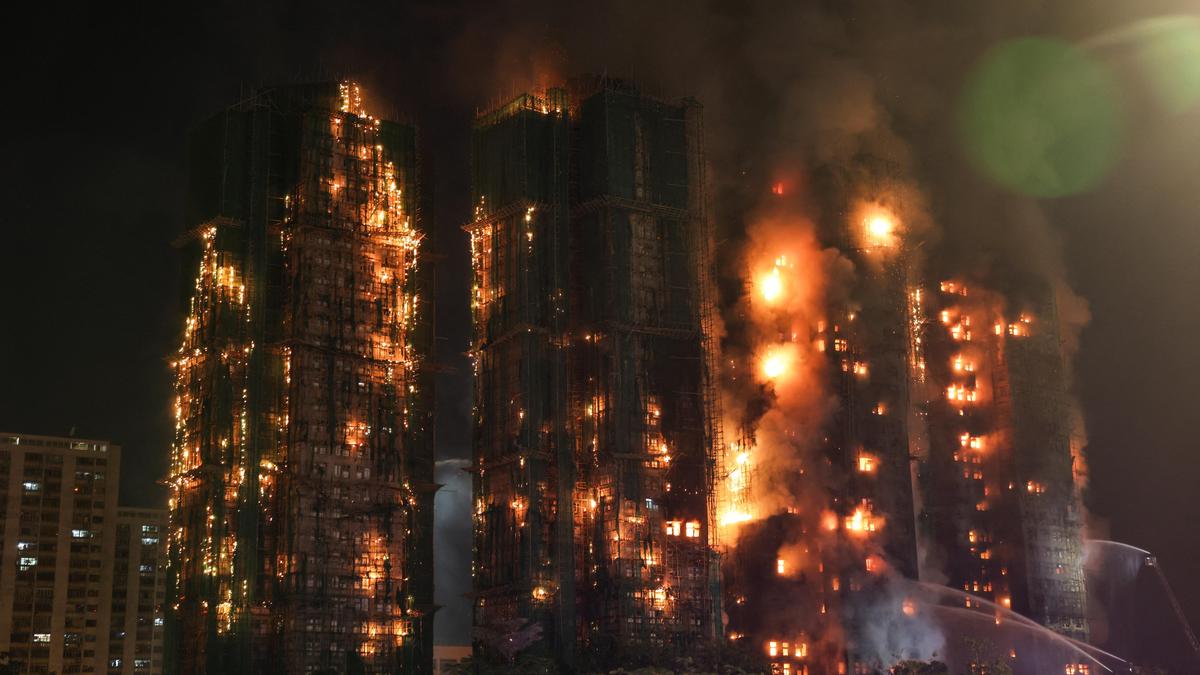

Flames and thick smoke rise from multiple residential blocks at the Wang Fuk Court housing complex during a deadly fire, in Tai Po, Hong Kong, China, November 26, 2025.
| Photo Credit: Reuters
Hong Kong authorities charged seven people and two companies on Wednesday (June 10, 2026) over the world’s deadliest residential building fire in decades, which killed 168 people at a public housing estate last year.
Hong Kong’s deadliest fire: Probe begins evidence hearings
The massive blaze, which engulfed seven of the eight high-rise apartment blocks at the Wang Fuk Court estate in November, prompted a months-long investigation in to the cause. Public hearings were told that almost all life-saving fire safety measures had failed on the day of the blaze because of human errors.
Hong Kong blaze: Why buildings have disastrous fires and how they can be prevented
Authorities “today charged seven individuals and two companies with 25 counts of offences, including manslaughter, conspiracy to defraud, ‘money-laundering’, attempting to pervert the course of public justice, and tax evasion”, the government said in a statement on Wednesday (June 10, 2026).

The seven people charged included directors and inspectors of a consultancy firm involved in the estate’s renovation, as well as the main contractor involved in the project, according to the statement. Substandard construction safety netting and cigarette butts were focal points of the probe into the causes and rapid spread of the world’s deadliest residential building fire since 1980.
Fire alarm systems for seven of eight blocks had also been deactivated, which “greatly shortened the time for residents to evacuate”, leading counsel Victor Dawes had told an independent committee conducting the probe. Required fire-retardant nets were not used in many places, and the windows were covered by foam boards, which may have contributed to the spread of fire into the flats, the panel heard earlier this year.
The Fire Investigation Task Force had maintained that an ignited cigarette caused combustible material to catch fire, sparking the blaze. Thousands of residents lost their homes in the blaze and relocated into temporary housing.

Published – June 10, 2026 01:43 pm IST
Leave a Reply