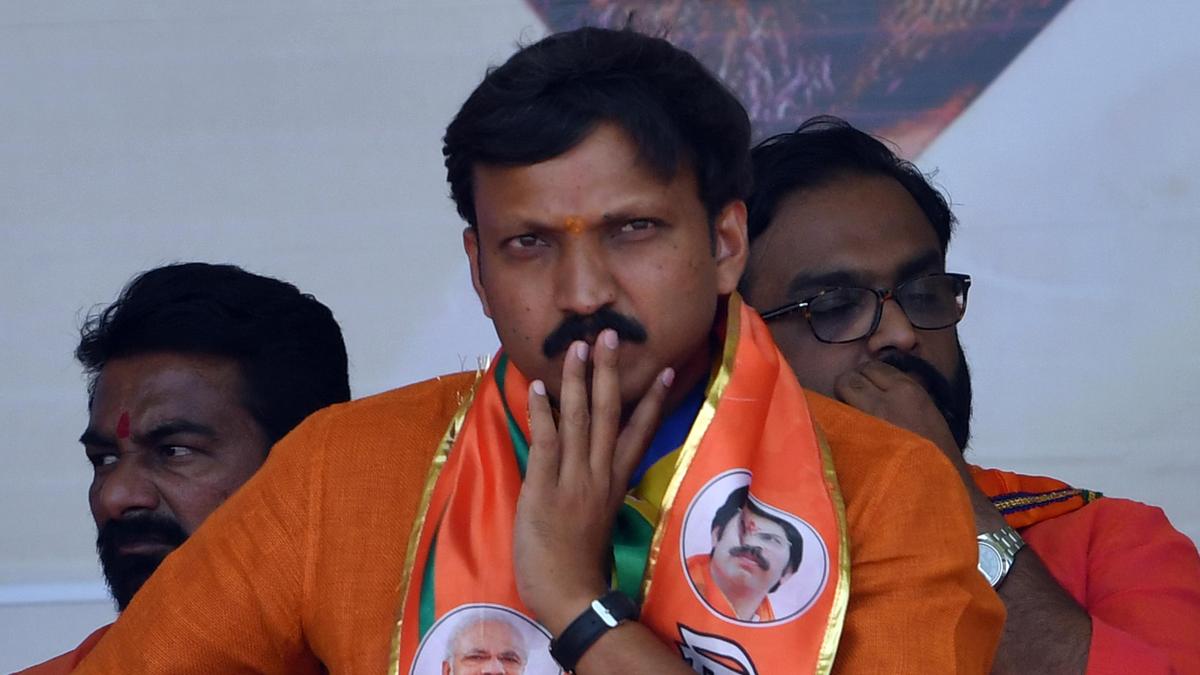

Omraje Nimbalkar. File.
| Photo Credit: VIVEK BENDRE
Two Maharashtra Lok Sabha MPs from Shiv Sena (UBT) did not sign on the letter to the Speaker on Wednesday (June 17, 2026), thereby halting Operation Tiger for the day, top sources confirmed to The Hindu. The two MPs are Omraje Nimbalkar and Sanjay Dina Patil. Of them, Sanjay Dina Patil was in touch with the Uddhav Sena leaders till Wednesday afternoon, sources said.
Meanwhile, top sources said that Operation Tiger won’t fructify if six Lok Sabha MPs don’t come together. “This is still a long process. After they come together and sign a letter, they will have to present themselves in front of the Speaker. Due process will follow thereafter. It is not a matter of a day or a two,” a senior leader told The Hindu.
Meanwhile, Shiv Sena UBT leaders claimed that their MP Omraje Nimbalkar was allegedly being pressurized due to a court verdict related to the assassination of his father Pawanraje Nimbalkar. “For Omraje Nimbalkar, the hanging sword is the judgement in the Pawanraje Nimbalkar case. It has been deferred to 20th June. We have learnt that the judgement is contingent on whether he supports Shiv Sena,” a Sena UBT leader said.
A special CBI court in Mumbai will pronounce its judgment in the 2006 murder case of Congress leader Pawanraje Nimbalkar on June 20. The case, which has seen a trial lasting 15 years, involves allegations of a contract killing conspiracy against former NCP MP Padamsinh Patil, the victim’s cousin.
The letter written by the Shiv Sena (UBT) Parliamentary Party leader Arvind Sawant was accessed by The Hindu.
Elaborating on the interpretation of the Tenth Schedule of the Constitution, Mr. Sawant’s letter states: “At the outset, I would like to emphasise that the Shiv Sena (Uddhav Balasaheb Thackeray) is one political party and remains so in the eyes of law. The parliamentary party owes its existence entirely to, and functions as a constituent part of, the political party. The constitutional framework does not envisage the existence of multiple competing formations claiming to represent the same political party within the House. Consequently, there can be only one authorised party leadership in Parliament, one recognised party Whip, and one recognised party structure acting under the authority of the political party and its competent organs.”
In the letter, the party has referred to constitutional provisions, and interpretations by the Supreme Court, while claiming the right to be heard before any decision was taken.
It has said that two separate conditions need to be fulfilled when it comes to a merger.
“First, a merger of the original political party; and second, the support of not less than two-thirds of the members of the legislature party concerned. The two requirements operate conjunctively and not disjunctively. Public reports appear to proceed on the erroneous assumption that the numerical requirement alone is sufficient. That is contrary to the Constitution and its interpretation by the Supreme Court. Accordingly, even assuming, without admitting, that a particular number of members of the legislature party have acted in concert, there has been no merger of the Shiv Sena (Uddhav Balasaheb Thackeray) with any other political party, nor has there been any constitutionally recognised transformation of the political party into another entity. The distinction deliberately drawn by the Constitution between a ‘political party’ and a ‘legislature party’ makes it clear that the conditions relating to both must be satisfied before Paragraph 4 can be invoked,” the letter said.
Published – June 18, 2026 01:08 am IST
Leave a Reply