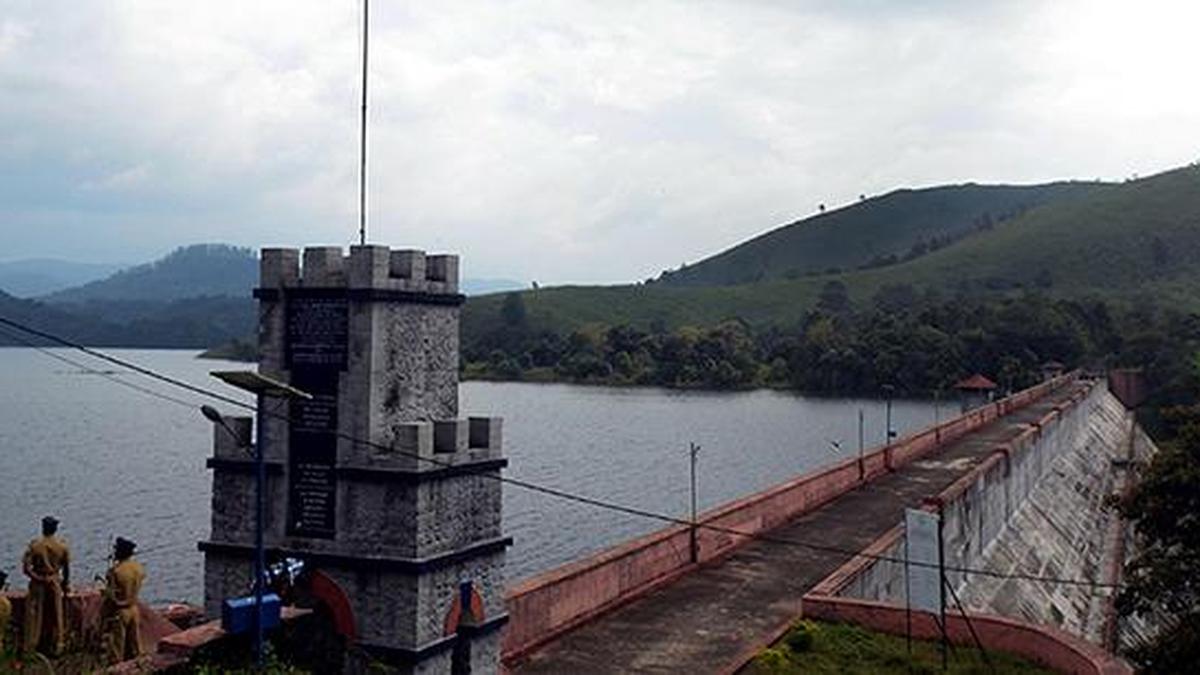

Representational view of the Mullaperiyar Dam on Kerala-Tamil Nadu border
| Photo Credit: Special arrangement
The Mullaperiyar Dam recorded alarmingly low water storage in July, dropping to 112.9 feet on Wednesday compared to 131.4 feet on the same day last year. This 18.5-foot deficit compared to last year’s data is severely affecting farming activities in the bordering districts of Tamil Nadu. It may also soon pose a threat to tourism in the Periyar Tiger Reserve (PTR) in Thekkady, as well as drinking water distribution in the Kumily and Chakkupallom panchayats.
PTR Assistant Field Director (AFD) R. Lakshmi stated that boating and other tourism activities in Thekkady are currently running smoothly.
“However, the catchment areas of the dam in the Periyar Tiger Reserve are not receiving rain. If the water level drops below 110 feet, boating activities may be affected. If this situation continues and the water level drops further, tourism will face disruptions,” Ms. Lakshmi said.
The low storage impacts not only Kerala but also neighbouring districts in Tamil Nadu. Nearly 1.5 lakh acres of farmland rely on Mullaperiyar water, including 14,700 hectares in the Theni district alone. Due to the lack of water, these farmlands currently remain dry.
Manoharan, a caretaker of paddy farms in Gudalur, Tamil Nadu, said that farmers in the local villages normally complete two paddy seasons with the support of rain and Mullaperiyar Dam water.
“This year, farmers had already prepared their lands for paddy cultivation, and the sprouted rice seeds meant for transplanting are now over-maturing. Farmers spent nearly ₹20,000 per acre to ready the fields for the initial farming phase. However, due to the absence of water, they cannot begin cultivation and may have to skip the season entirely,” Mr. Manoharan said. “Normally, when Kerala gets good rain, the border villages of Tamil Nadu do too. But right now, there is no rain in either state. We usually have two harvesting seasons a year, but this year, we don’t even know if a single farming season will be possible.”
According to officials, Tamil Nadu typically draws water from Mullaperiyar starting in the first week of June for a 120-day period to sustain the initial cultivation season. However, Tamil Nadu can only begin releasing water once the reservoir reaches a level of 118 feet.
Hoping for rain in the reservoir’s catchment areas, Tamil Nadu farmers held an interfaith prayer meeting in front of the Mullaperiyar Dam shutter on Sunday. Priests from the Muslim, Christian, and Hindu communities offered prayers for rain. A similar low-storage crisis occurred in 2019, during which farmers’ groups also organised interstate prayers.
Published – July 16, 2026 05:15 am IST
Leave a Reply