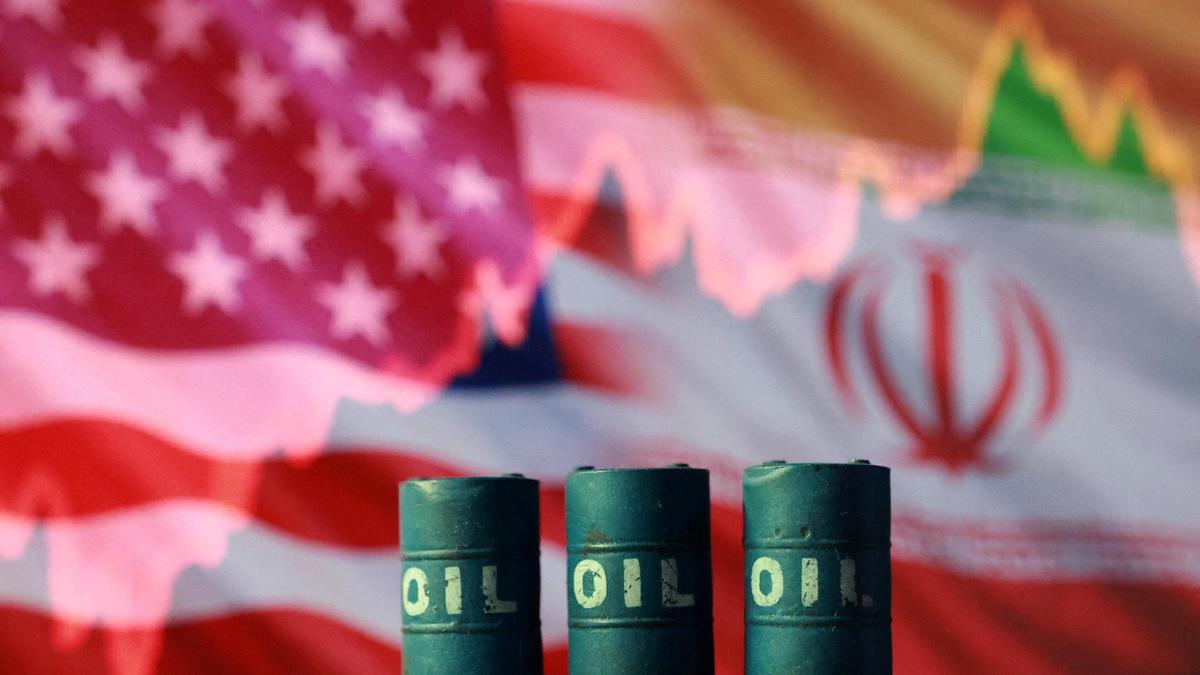

Brent crude futures were last up $1.50, or 1.8%, to $84.80 per barrel at 0330 GMT, while U.S. West Texas Intermediate crude rose $1.70, or 2.2%, to $79.84 a barrel. File.
| Photo Credit: Reuters
Oil prices rose nearly 3% on Tuesday (July 14, 2026) to their highest in four weeks, as the U.S. reimposed its naval blockade of Iran while the two countries stepped up attacks in the Strait of Hormuz, heightening uncertainty about energy flows.
Brent crude futures were last up $1.50, or 1.8%, to $84.80 per barrel at 0330 GMT, while U.S. West Texas Intermediate crude rose $1.70, or 2.2%, to $79.84 a barrel.
Both contracts earlier rose more than $2 a barrel before paring some gains, while Brent had surged 9.6% in the previous session, its biggest daily gain since May 2020.
Oil prices are now at their highest since the two countries signed a memorandum of understanding to end the war on June 17.
The U.S. military carried out a third consecutive night of strikes against Iran on Monday (July 13, 2026), as U.S. President Donald Trump reinstated a blockade of Iranian shipping and proposed charging a 20% fee to guard the Strait of Hormuz.
“The latest escalation, including the U.S. reinstatement of the blockade and Iranian responses, has clearly injected fresh risk into the market,” KCM Trade chief market analyst Tim Waterer said.
“While a full closure hasn’t occurred, the competing objectives of both sides have made the supply picture highly uncertain,” he added.
Amid the strikes, two United Arab Emirates tankers were hit by two Iranian cruise missiles in the southern lane of the Strait of Hormuz in Omani territorial waters, the UAE Ministry of Defence said on Monday (July 13, 2026), killing one Indian crew member and wounding eight others.
Shipping data on Monday (July 13, 2026) also showed the number of tankers transiting the Strait of Hormuz fell in the past day to the lowest level in two months.
“The key variable to monitor is the physical movement of crude through the Strait of Hormuz. Any meaningful blockage of tanker traffic, prolonged reduction in vessel movements, or disruption to export flows would likely trigger another leg higher in oil prices,” said Phillip Nova analyst Priyanka Sachdeva.
“Conversely, if barrels continue to move despite the military escalation, part of the current geopolitical premium could gradually fade.”
Elsewhere, Yemen’s Houthi movement fired missiles at Saudi Arabia after accusing the kingdom of bombing an airport under its control on Monday.
“If the Houthis extend their attacks to Saudi’s crude products in the Red Sea, it could put (further) uncertainties on crude flows from the region,” Simon Wong, a portfolio manager at Gabelli Funds, said in a note.
Meanwhile, U.S. crude oil stockpiles were expected to have fallen last week, while gasoline and distillate stocks likely rose, a preliminary Reuters poll showed on Monday (July 13, 2026).
Published – July 14, 2026 11:15 am IST
Leave a Reply