The U.S. is demanding that Iran issue a public statement declaring the Strait of Hormuz is open, and that ships crossing the vital corridor won’t be attacked, senior U.S. officials said Friday (July 10, 2026), adding that internal power struggles in Tehran have made it difficult to reach and maintain a deal.
Also read | Iran has asked to continue talks, and the U.S. agreed, Trump says
The U.S. officials, who spoke on condition of anonymity to describe to reporters the state of play with Iran, said the resumption of strikes this week came after what they described as a rogue faction of Iranian hard-liners trying to sabotage the ceasefire between Tehran and Washington.
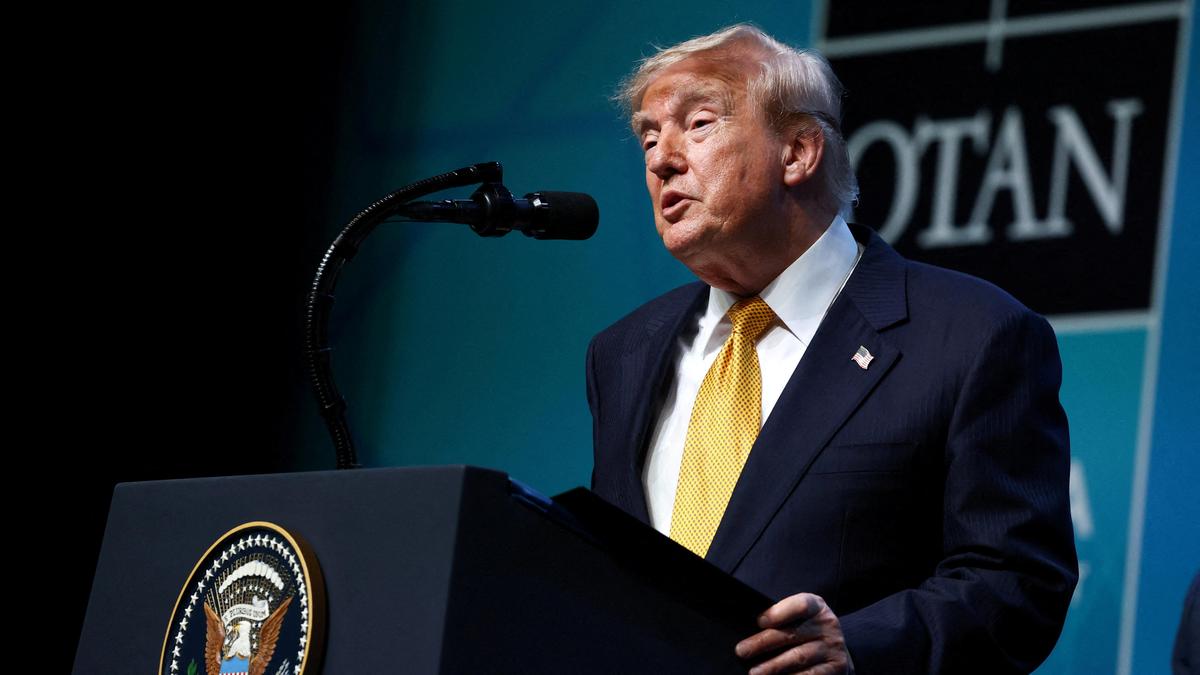
It comes as U.S. President Donald Trump reiterated on social media Friday (July 10, 2026) that he views the interim ceasefire deal as “OVER!” But he said the U.S. would continue talks aimed at putting a permanent end to the war.

The officials said Friday (July 10) that Mr. Trump is giving U.S. negotiators limited time to reach a deal with Iran, but, in a sign of the challenges ahead, they underscored that the President had a wide range of options if talks fall apart. They also said a power struggle was playing out in real time in Iran after U.S. and Israeli strikes at the start of the war killed its longtime leader, Ayatollah Ali Khamenei.
The U.S. is working on pressing Iran to make a public statement that the Strait of Hormuz, a vital waterway for world energy markets, is open and free to ships to transit, the officials said.
But moments before the U.S. officials spoke, Tehran’s diplomat at the United Nations told reporters that any activity in the Strait of Hormuz, including its opening or demining operations, “rests exclusively with Iran.”
“Any attempt, by external actors, to interfere with or establish a power arrangement would violate the [interim deal], and undermine its implementation, delay the restoration of normal commercial navigation, jeopardise maritime safety, and increase regional tensions,” Ambassador Amir Saeid Iravani said outside the UN Security Council.
Iran has said the strait must now be under its sole control and that vessels should begin to pay fees to Tehran — even though the world for decades has considered it an international waterway. About a fifth of all traded oil and natural gas passed through the strait before the war began.
Iran’s grip on the strait during the conflict led to a global energy crisis, though oil prices have sharply dropped since wartime highs of $120 a barrel.
Unclaimed strikes came after US ended its attacks
No one claimed responsibility Friday for airstrikes that hit Iran after the US said it finished its attacks, leaving questions about who else may be targeting the Islamic Republic.
US Central Command spokesperson Capt Tim Hawkins said there were “no operational updates” after Trump’s pronouncement about the ceasefire.
Gulf Arab states, which Iran has targeted repeatedly since the war began February 28, did not immediately respond to requests for comment Friday about the strikes. Israel, which took part in the Iran war, also has not claimed any recent attacks on Iran.
The strikes Thursday, just as Iran prepared to bury the late Supreme Leader Ayatollah Ali Khamenei, hit areas across southern Iran. The country’s theocracy hasn’t directly blamed anyone, though one lawmaker warned the United Arab Emirates about allegedly providing support to the US campaign against Iran.
Iran responded to the strikes Thursday by launching a wider volley of attacks across the Mideast, targeting Bahrain, Jordan, Kuwait and Qatar. One person was reportedly hurt in Kuwait as air defence systems targeted the incoming fire across the region.
Mediators and allies regroup after strikes
Iranian Foreign Minister Abbas Araghchi plans to discuss the strait with his Omani counterpart at a meeting Saturday (July 11, 2026) in Oman, Iran’s state-run IRNA news agency said. Turkish Foreign Minister Hakan Fidan told his country’s state broadcaster TRT that he believed “a solution can be reached” this weekend between Iran and Oman, which lie on opposite sides of the narrow waterway.
The leader of the UAE, Sheikh Mohammed bin Zayed Al Nahyan, traveled to Kuwait immediately after the Iranian attack for a meeting with the small, oil-rich nation’s ruling emir. Gulf Arab countries also held calls with Qatar’s Foreign Minister. He has been deeply involved, along with Pakistan, in mediating Iran-U.S. talks.
Pakistani Prime Minister Shehbaz Sharif said he spoke separately on Friday (July 10) with Iranian President Masoud Pezeshkian and with Qatar’s ruling emir, Sheikh Tamim bin Hamad Al Thani, and stressed to both the need for restraint and diplomacy.
Israel’s government said Mr. Netanyahu spoke with Mr. Trump on Thursday (July 9, 2026) night, with Mr. Trump updating Mr. Netanyahu “on American moves in the Gulf.”
Israel Katz, Israel’s Defence Minister, also renewed threats that his nation stood ready to confront Iran if needed.
“If we will have to return, we will return with even greater force,” Mr. Katz told a military ceremony.
Iran keeps up its threats
On Friday (July 10, 2026), Iranian state media quoted Esmail Kousari, a member of the Iranian parliament’s national security committee and a former commander in the paramilitary Revolutionary Guard, as warning the UAE would “pay the price for its cooperation with the United States.” He accused the Emirates of having a “behind-the-scenes” role in the recent U.S. attacks.
Meanwhile, Iran insists it must be the sole controller of the Strait of Hormuz. But the U.S. continues to urge mariners to travel on a southern route through Oman’s territorial waters to avoid Iran.
Published – July 11, 2026 07:41 am IST
Leave a Reply