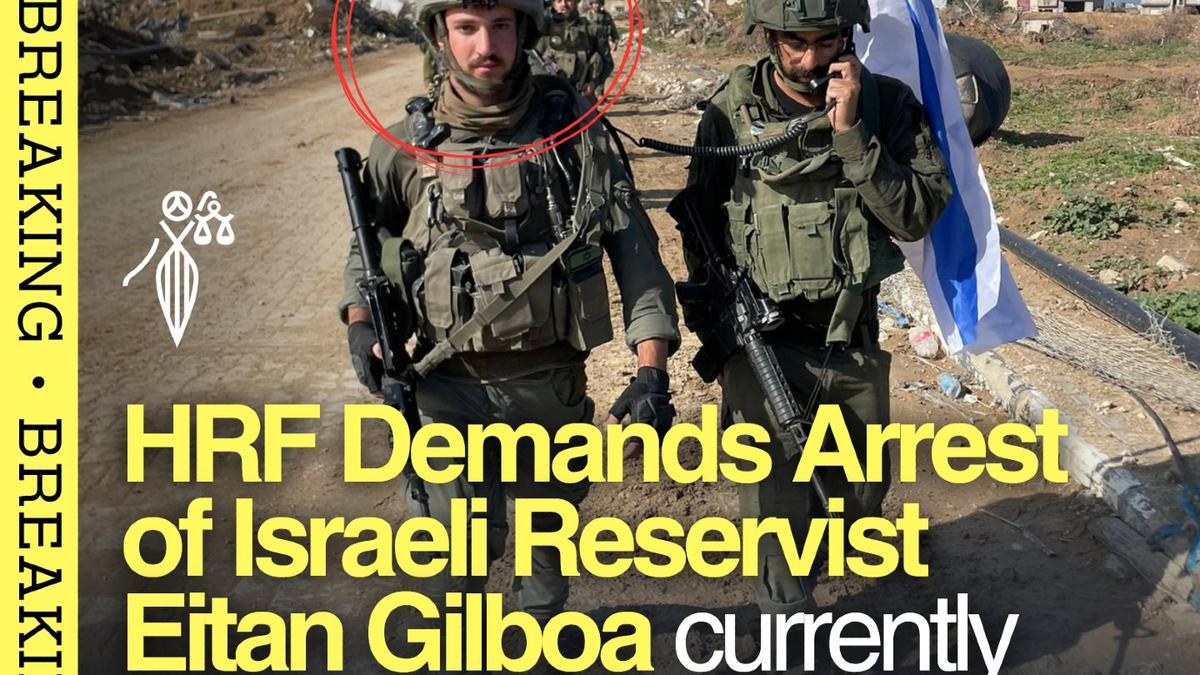
On June 2, 2026, the Hind Rajab Foundation (HRF), a Palestinian rights organisation based in Brussels, filed a complaint with the Union Ministry of Home Affairs, the Bureau of Immigration and the police to arrest Eitan Gilboa, an Israeli soldier, who was found to be vacationing in Himachal Pradesh. Gilboa, a member of the 271st Combat Engineering Battalion, was accused by the organisation of committing “war crimes in Gaza” in 2024.
The organisation submitted evidence that involves specific instances in which he participated in the destruction of residential buildings and civilian infrastructure in Khan Yunis and Rafah. He filmed videos of himself celebrating the execution of these activities, which were later posted on social media by his mother. The HRF provided geo-located videos, social media videos and chain-of-command documentation along with the complaint.
Data | Around 2% of Gaza’s child population killed by Israeli security forces : UN report
Legal dimensions
The HRF alleged that these activities by Gilboa were in violation of the Fourth Geneva Convention, to which India is a signatory. Under this convention, any intentional launch of an attack which is known to cause loss of life or injury to civilians, along with severe damage to civilian objects, is considered to be a war crime and a grave breach of the convention.

Eitan Gilboa’s pictures uploaded by the Hind Rajab Foundation.
| Photo Credit:
hindrajabfoundation.org
Though India does not have its own law criminalising war crimes, it has passed the Geneva Conventions Act, 1960. Under this law, any act which constitutes a ‘grave breach’ under four sections of the Geneva Convention is criminalised. India can arrest any person, irrespective of nationality, if found to have committed an offence under the convention, regardless of the geographical location of the offence.
If an arrest is not possible, the Home Ministry and the Bureau of Immigration can facilitate the deportation of the accused from Indian territory. However, the Union government did not issue a statement regarding the allegations by HRF, nor did it initiate a probe.
Comment | India’s ‘Israel habit’ meets West Asian realities
‘Hummus trail’
Though Gilboa has now fled India, he was traced by pro-Palestinian activists and the HRF in Old Manali and Gondla Village of Himachal Pradesh, which are popular spots among Israelis along the ‘Hummus trail’.
Every year, around 80,000 Israelis visit India, a large number of them young veterans who have been discharged from the mandatory Israeli army service. This trip, known as the tiul gadol, could last up to 6 months or a year and is mainly funded by the bonus they receive after serving in the army. In February 2026, the Israeli government allocated 4 million NIS to boost tourism collaboration with India.
From the north to the south of the country, there are several areas which are frequented by Israelis, and this is colloquially known as the ‘Hummus trail in India’. This includes Kasol (also known as mini-Israel), Kodaikanal, Kerala, Goa, Hampi, Gokarna, Rishikesh, Varanasi, Pushkar, Almora, Dharamkot and, more recently, the Andaman and Nicobar Islands.
In these places frequented by Israelis, one can observe several changes to the cultural landscape. It is common to see signs in Hebrew, posters promoting the Israeli Defence Forces, along with cafes, stores and hostels run by Israelis. In 2015, an Israeli-run cafe in Himachal Pradesh faced backlash for allegedly denying entry to Indians with a ‘whites only’ sign.
According to a 2020 study published in the Journal of Travel & Tourism Marketing, drug abuse and rave parties are common along the Hummus trail, with drug peddling cases on the rise in these regions. The study found that in order to cope with mental health challenges faced by these veterans during their service in the army, they resort to high drug consumption. Mental health workers from Israel have also been sent to India to aid these reservists.
Need for scrutiny
“India-Israel tourism is not merely about routine holidays and cultural exchange. It is part of a broader normalisation process that seeks to deepen social and economic ties between the two countries,” Azad Essa, author of Hostile Homelands: The New Alliance Between India and Israel told The Hindu. He added that Israel has thanked India multiple times for being one of the few countries that have provided political and moral support to Israel, when much of the world has turned its back on it, at least publicly.
As Israel has killed over 73,000 Palestinians in the Gaza Strip since the October 7, 2023 Hamas attack, and is currently facing a case filed by South Africa in the International Court of Justice over allegations of genocide, allowing unrestricted entry of Israeli soldiers to India after their service in Gaza demands scrutiny.
The UN Commission of Inquiry, in its report, has said that the Israeli military “deliberately carried out acts inflicting death and severe bodily and mental harm on hundreds of thousands of Palestinian children.” Five-year-old Hind Rajab is among the thousands of children killed by the Israeli forces in Gaza.
The HRF’s legal action in other countries against Israeli soldiers travelling there has resulted in successful outcomes in Brazil, Romania, Peru, Belgium, and Canada, according to its website. A court in Chile is the latest to recognise universal jurisdiction over war crimes in Gaza while hearing HRF’s complaint against Rom Kovtun, an Israeli-Ukrainian citizen accused of war crimes during the siege of Al-Shifa Hospital in Gaza.
“The ‘Hummus Trail’ — or these extended trips that IDF soldiers take to decompress after military duties — cannot become a route for impunity,” Natacha Bracq, Head of Litigation at the HRF, said in a statement.
Published – July 05, 2026 02:58 pm IST
Leave a Reply