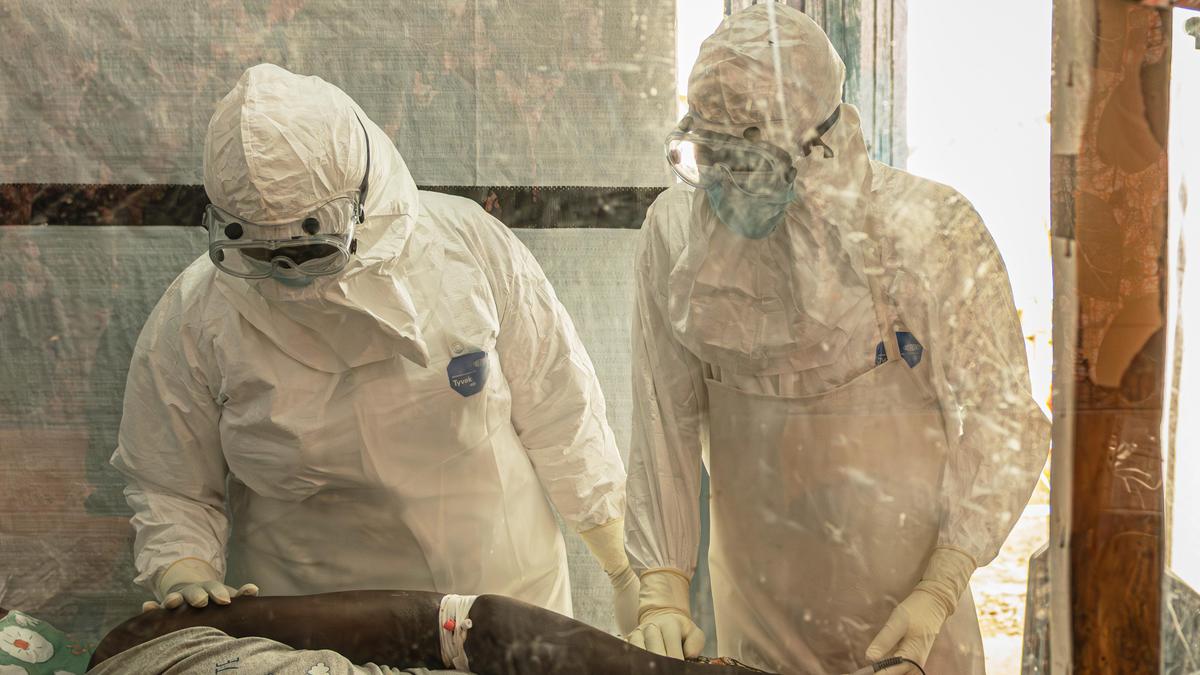

There are currently no approved vaccines or treatments for Ebola’s Bundibugyo strain, which has caused more than 1,400 cases in DRC, including 438 deaths. A file photograph of health workers attending to a patient
| Photo Credit: AP Photo
A treatment trial for the Bundibugyo Ebola outbreak in the Democratic Republic of Congo enrolled its first patient on Thursday, July 2, 2026, marking a milestone in efforts to combat the epidemic, World Health Organization chief Tedros Adhanom Ghebreyesus told reporters.
Dr. Tedros, however, cited an attack on an Ebola treatment centre in Ituri province in which two people died as a sign of ongoing difficulties in tackling the spread of the disease.

“Despite all this progress, we continue to face significant challenges, including mistrust and violence,” the WHO director-general said.
There are currently no approved vaccines or treatments for Ebola’s Bundibugyo strain, which has caused more than 1,400 cases in DRC, including 438 deaths. DRC has recorded an average of 38 new confirmed cases a day over the past two weeks, Dr. Tedros said.
The trial, which could take months to complete and includes more than 1,000 patients, will evaluate Mapp Biopharmaceutical’s experimental MBP134 antibody as a standalone treatment for Bundibugyo Ebola, as well as in combination with Gilead Sciences’ antiviral drug remdesivir, the WHO said.

There are enough drug supplies for the trials, according to the WHO, which said it was in discussions with the United States, which donated supplies of MBP134, and Gilead to ensure patients would be able to access the drugs after the trials if they are
shown to be safe and effective.
Gilead said on July 2 that it has donated more than 2,000 vials of remdesivir for the trial, in addition to the 2,000 vials it provided for emergency use in June.
The WHO chief also said other parts of the response were showing improvement: there are now 10 laboratories that can test for Ebola and follow-ups are being conducted for four in five contacts, although more contacts still needed to be identified per case.

Treatment capacity has also expanded, with 650 beds available, of which about 96% are currently occupied. Dr. Tedros said the WHO and its partners were working to add 300 additional beds.
Published – July 04, 2026 02:07 pm IST
Leave a Reply