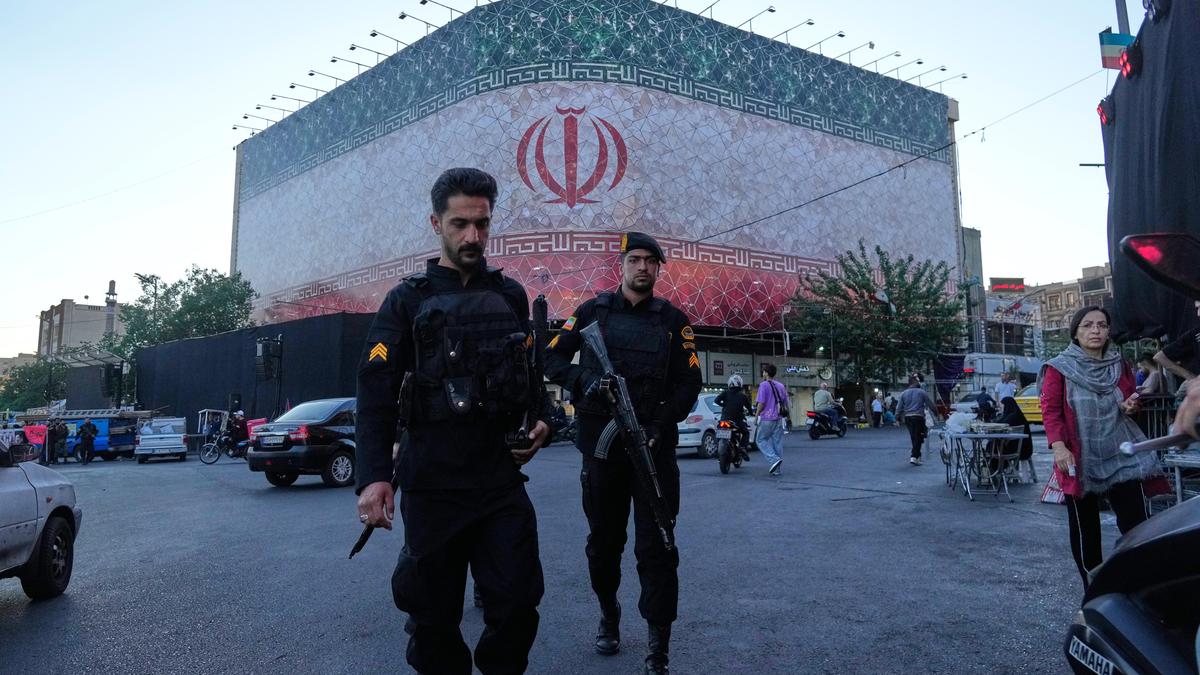

Policemen walk in front of a huge banner showing Iranian flag at the Islamic Revolution square in Tehran, Iran.
| Photo Credit: AP
U.S. has brokered a permanent peace deal with Iran, slated to be signed on Friday (June 19, 2026) in Switzerland, putting an end to war that lasted for over 100 days. The deal, aimed at reaching a nuclear peace agreement, between Tehran and Washington is being reportedly hailed by both sides, claimed media reports in Iran.
Also Read : West Asia LIVE
Despite the positive development, an uncertainty looms large due to Israel’s ongoing military hostility with Iran-backed Hezbollah in Beirut, potentially suspected to endanger the deal. On Sunday (June 14, 2026), U.S. President Donald Trump had urged Israel to not ‘blow it’ after Israel’s military said it launched strikes on Hezbollah. Israel’s Prime Minister Benjamin Netanyahu responded back, saying “Israel will not tolerate firing into its territory”.

Who announced the deal?
Pakistan’s Prime Minister Shehbaz Sharif, who has been at the helm of U.S.-Iran ceasefire negotiations since April 12, took into X and confirmed the deal. Mr. Sharif said, “Both sides have declared the immediate and permanent termination of military operations on all fronts, including in Lebanon”.

He mentioned, “With the agreement now in place, mediators will facilitate a series of meetings this week. These pre-implementation discussions will lay the foundation for the technical talks and the official signing ceremony”.
Eventually, Mr. Trump confirmed the permanent peace deal in his post in Truth Social. He wrote, “The Deal with the Islamic Republic of Iran is now complete. Congratulations to all! I hereby fully authorize the toll free opening of the Strait of Hormuz, and, simultaneously herewith, authorize the immediate removal of the United States Naval blockade. Ships of the World, start your engines. Let the oil flow!”.
What does the deal entail?
Following the announcement, the nitty-gritties surrounding the permanent peace deal remained obscure. With U.S. aiming for Iran to drop it’s nuclear plan, here are the probable issues being mentioned in the memorandum:

- The status of Strait of Hormuz is likely to be open for everyone without any tolling arrangement. The key waterway is the intersection to one-fifth of the world’s oil flows. The United States has consistently opposed any shipping toll regime in the Strait, including proposals reportedly floated in talks with Oman. Reaffirming Washington’s position last month, the US President said: “The strait is going to be open to everybody. Nobody’s going to control it.”
- A key clause is likely to be included on suspending military hostilities in Lebanon. This has a higher probability of being included in the memorandum. However, Trump did not make any mention of Lebanon on his Truth Social post.
- President Donald Trump reiterated that “Iran will never have a nuclear weapon,” officials indicated nuclear negotiations would continue over the next 60 days. Trump also warned that Tehran could face renewed U.S. military action if talks fail. However, Iran insists its programme is peaceful and has not agreed to surrender its enriched uranium stockpile. The interesting part would be to take stock on Friday about U.S.-Iran nuclear agreement in the peace deal.

Timeline of negotiations
- April 2026 : A new diplomatic channel opened through Pakistan, with talks focusing on a broader settlement, including ceasefire terms, maritime security and the nuclear issue.
- June 8–14, 2026 : Mr. Trump announced movement towards an “immediate ceasefire”. Later, Pakistan said a final text of a peace agreement had been agreed. On June 14, the U.S. and Iran reached a framework deal providing for a 60-day ceasefire, reopening of the Strait of Hormuz and renewed nuclear negotiations.
Published – June 15, 2026 11:40 am IST
Leave a Reply