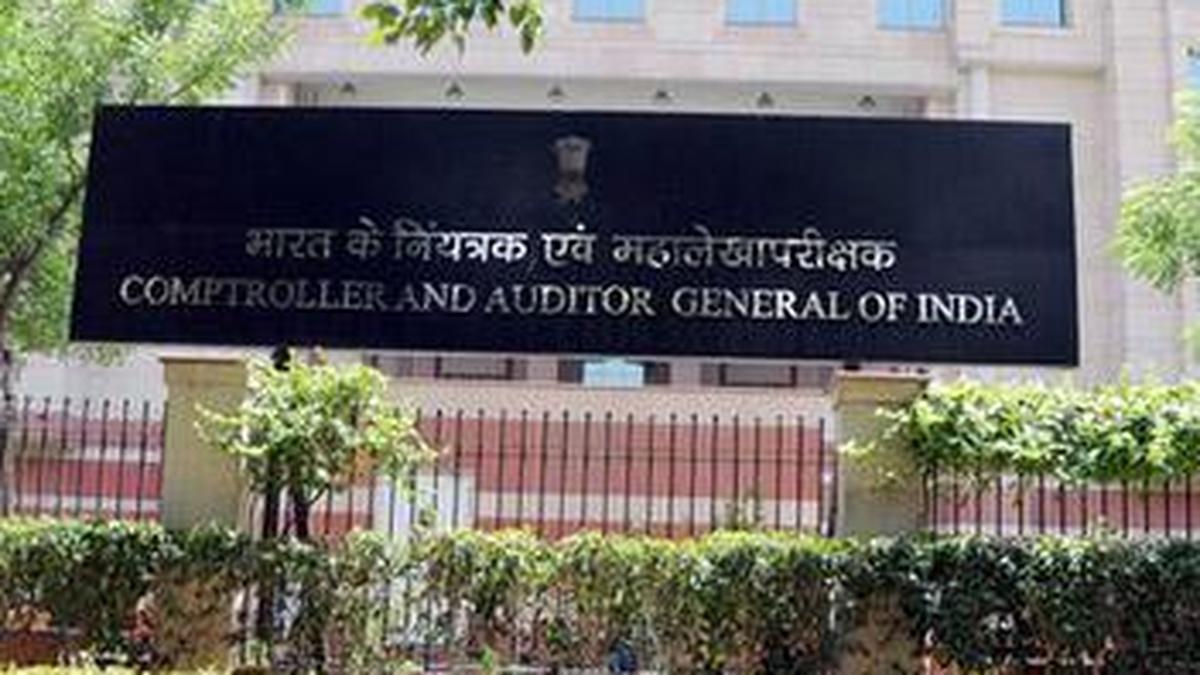
On the penultimate day of the ongoing five day monsoon session of the Bihar legislature, report of the Comptroller and Auditor General (CAG) of India on Bihar for the year 2024-25 was laid in State assembly on Thursday (July 23, 2026) by Finance Minister and Deputy Chief Minister Bijendra Prasad Yadav which highlighted that 62,632 outstanding Utilization Certificate (UC) of ₹92,132.75 crore were yet to be received by the Bihar office as on March 31, 2025 and the top five departments of the state government with the maximum amount of outstanding UCs are Health, Rural Development, Urban Development, Education and Panchayati Raj.
“62,632 outstanding Utilisation Certificates (UCs) of ₹ 92,132.75 crore were yet to be received by the Principal Accountant General (Accounts & Entitlements), Bihar as on March 31, 2025”, said the CAG report under the title of “Financial Reporting Practices”, which was laid on the floor of the state assembly on Thursday (July 23).
The top five departments with the maximum amount of UCs during the period are Health, Rural Development, Urban Development, Education and Panchayati Raj. “Since non-submission of UCs is fraught with the risk of misutilisation, the state government must monitor this aspect closely and hold the persons concerned accountable for submission of UCs on time”, said the report, adding that though “the matter was raised with the Finance Department of the Bihar government, but till January 2026, the reply is awaited”.
The report under the “Budgetary Management” section said that “during the financial year 2024-25, out of the total budget of the state (₹ 3,64, 518.87 crore), only ₹2, 87, 178.49 crore (78.78% of the total budget) was spent, leading to savings of ₹ 77, 340.38 crore. Out of the total savings, an amount of ₹10,388.35 crore (only 13.43%) was surrendered”, and asserted further that, “this indicated unrealistic projections and deficient alignment between budget and expenditure”. “Although, the Budget estimate was enhanced by 28.81% through Supplementary Budgets but the expenditures remained only 1.48% above the original budget in Financial Year 2024-25”, stated the report.
It further said that the “maximum expenditure (39.85 % of the total expenditure) was incurred during the last quadrimestre of the financial year, indicating a rush of expenditure at the fag end and breach of the prescribed ceiling”. The report also added that “during 204-25, the state government transferred ₹ 441.29 crore less than the required central share of Centrally Sponsored Schemes (CSS). Further, there were delays up to 167 days and 246 days in transferring the Central and State share, respectively, from the state treasury to the concerned SNA [Single Nodal Agency], creating extra fiscal burden on the state’s exchequer”.
Under section of MGNREGA (Mahatma Gandhi National Rural Employment Guarantee Act) in Bihar the report flagged that “in the absence of any baseline survey during 2019-24, there was no mechanism available with the department to assess the quantum and timing demand for work at the Gram Panchayat level, as well as any local changes in pattern of livelihoods and opportunities for work”. It further highlighted that “against 13,798 sanctioned posts for the implementation of MGNREGA in Bihar, 6,086 posts (44%) were vacant. The extent of vacancies ranged from 16 % in the case of District Programme Officers (DPOs) to 80% for computer operators”. “As of March 2024, ₹ 36.22 crore was lying unadjusted advance against various implementing agencies for more than five years”, it said further.
“The State government had not framed any rules regarding the frequency, place and procedure of the meetings of the State Employment Guarantee Council (SEGC) established. In the absence of such rules, the SEGC held only three meetings during 2021-23, indicating insufficient monitoring of the scheme at the state level”, said the CAG report.
Under “construction, raising and strengthening of embankments under the Water Resources Department” section, the report said that “due to construction of embankments in patches on account of non-availability of land along Jhim Jamura and Banke rivers under Adhwara basin, the intended benefit of protection of 5.26 lakh population and 17,400 ha [hectare] agricultural land was not achieved, rendering ₹28.97 crore unfruitful (December 2024)”. Similarly, the report stated that “the education department did not assess and pay the service charge in respect of its 161 buildings for the period 1995 to 2023 within the stipulated time, resulting in an avoidable expenditure of ₹ 8.47 crore towards penal interest”.
Under “Implementation of “Har Ghar Nal Ka Jal Yojna” in Bihar, the report underlined that “non/ inadequate baseline surveys led to unreliable estimates for targeting and coverage of households under the scheme. PHED (Public Health Engineering Department) could not cover 11.22 lakh households under 46,633 rural wards, including 8.07 lakh households in quality-affected wards. “In five test-checked Public Health divisions, ₹2.31 crore was paid to contractors for works that had actually not been executed”, it wondered.
Nonetheless, the state’s Deputy Chief Minister, who is also the state’s Finance and Commercial Taxes Minister, Bijendra Prasad Yadav had reiterated that there was “no paucity of funds” in the state.
Published – July 24, 2026 06:06 am IST
Leave a Reply