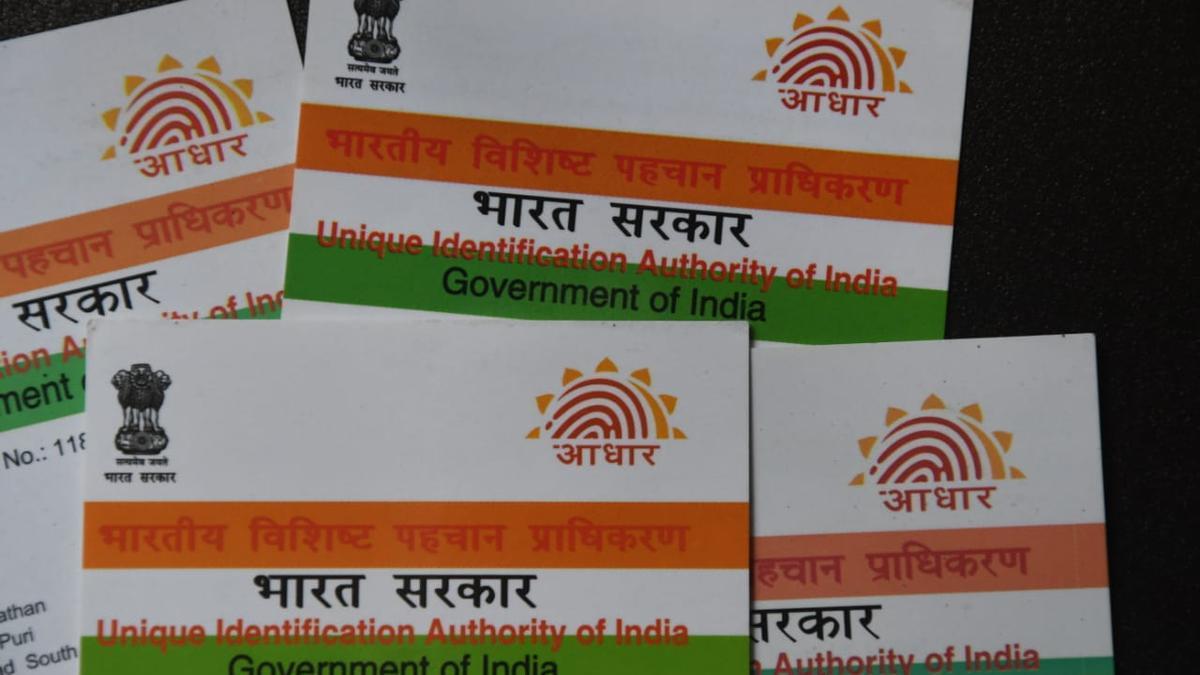

Representational file image.
The story so far: When the war in West Asia began in February, and India started feeling the heat by way of impact on fuel supplies, the Ministry of Oil, Petroleum, and Natural Gas began pushing biometric authentication of LPG connections to eliminate ghost connections and prevent diversion of domestic cooking gas cylinders.
Since the process remains unfinished months later, the national oil marketing companies recently sent messages to domestic consumers urging them to complete eKYC by August 16 and if not done by then they will have to convert to commerical cylinders.
What is the need for e-KYC?
According to an official communication, the biometric authentication mechanism is designed to eliminate ghost connections, minimise the unauthorised diversion of domestic cooking gas cylinders, and ensure accurate direct benefit transfer (DBT) financial tracking to valid beneficiaries. The DBT at the moment stands at ₹ 24.50 per eligible consumer per booking. Those paying Income Tax or earning over ₹10 lakh per annum are not eligible for this subsidy benefit. The process of e-KYC was not started just in February-March this year but had been under way for quite some time now. In November 2024, around 50% of the process had been completed in some places.
What is the status of e-KYC compliance?
As on April 1, 2026, the customer base of the oil marketing companies (OMCs), IOCL, BPCL and HPCL together stood at 33.39 crore. Though there is no official data available, the percentage of completion of e-KYC varies from distributor to distributor. In some places, it is 55% and in some others, as high as 88%. In Tamil Nadu, which has over 2.27 crore active consumers, it stands at 86% for non-PM Ujjwala Yojana consumers and 88% for Ujjwala Yojana consumers who are provided subsidy.
How to complete your biometric Aadhaar authentication?
Linking your Aadhaar with the consumer number using biometric data — finger prints or iris scan — is called biometric Aadhaar authentication. Domestic LPG consumers can get it done via the delivery personnel or go to their respective gas agency or do it from the convenience of their home by downloading two mobile applications. When opting to do it at home, ensure the Wi-Fi is steady and during the iris scan, it is best if you have a white background. This link has explanatory videos for all the three OMCs. https://pmuy.gov.in/e-kyc.html
Consumers can also call 1800 2333 555 for assistance.
What are the issues faced by consumers and distributors in getting authentication done?
In many cases, the gas delivery personnel, many of whom are illiterate. do not know how to assist the consumer. They feel it takes too much of their time that they would rather spend delivering cylinders to consumers. Internet connectivity is an issue in many places, especially rural areas. Senior citizens and persons with disabilities find it difficult to do self-authentication. This section of consumers says they need help from gas agencies or OMCs to get the process done at home as they cannot travel to the agencies or wait in queues to get the process done. Distributors say they are short-staffed and though they have been sending personnel to homes, coverage remains minuscule. They say they cannot threaten or bully their customers, especially senior citizens, who have been with them for many years. Getting OTPs is an issue due to lack of mobile network signal even in urban areas.
Distributors and consumers feel that more time should be given to complete the process and that special considerations must be given to senior citizens. Perhaps the OMCs can directly do a house to house drive for senior citizens and persons with disabilities.
Published – July 31, 2026 04:16 pm IST
Leave a Reply