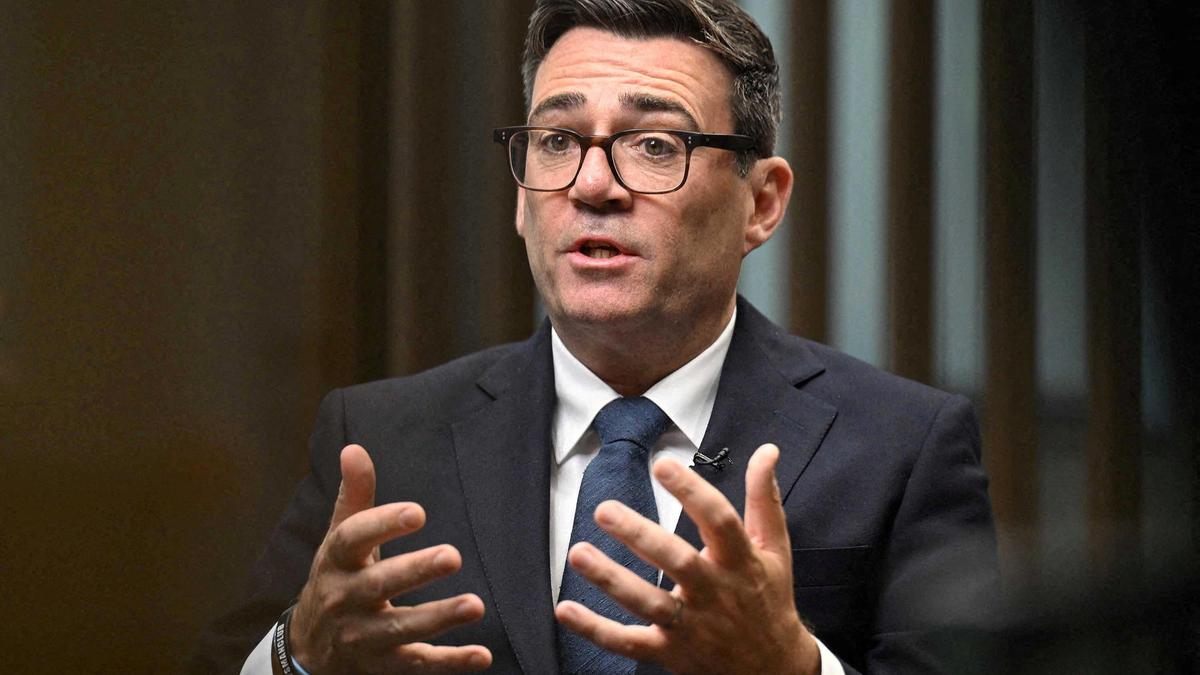
When Andy Burnham took charge as the U.K.’s Prime Minister on July 20, he became the seventh occupant of 10 Downing Street since the country decided to exit the European Union (EU) by a narrow margin in the Brexit referendum held in June 2016.
The fact that the U.K. has never seen these many Prime Ministers in any 10-year period in at least the last five decades speaks to the political volatility the country is witnessing. Although one cannot attribute the unprecedented revolving door of Prime Ministers to Brexit alone, the instability provides the backdrop to test whether the U.K.’s exit from the EU — which legally came into force in January 2020 — made any difference in meeting the objectives it purportedly wanted to achieve.

The two key arguments made in favour of the exit were to control migration and enable the U.K. to chart its own path in trade by freeing the country from the “unfair” regulations imposed by the EU.
Taking back control of borders
The ‘Vote Leave’ campaign used the famous slogan “take back control”, meaning in part to increase control over the U.K.’s borders and break free from the EU’s free movement programme, which allows citizens of member countries to live and travel across other member countries without a visa.
Seven months after the referendum, the then Prime Minister Theresa May said, “Brexit must mean control of the number of people who come to Britain from Europe.” The Conservative Party manifesto for the 2019 election, which Boris Johnson won to become the Prime Minister, promised that there would be fewer lower-skilled immigrants and that overall immigration would come down. Instead, the data show that net migration (immigration minus emigration) moved in the opposite direction, although immigration from EU countries fell.
After free movement between the U.K. and the EU ended in January 2021, net migration reached 8,91,000 in 2022 and 8,48,000 in 2023, more than three times the 2016 level. In fact, the total net migration of 2.7 million in the five-year period from 2021 to 2025 was more than double the 1.27 million recorded in the five years before the Brexit vote (2012-2016).
Brexit campaigners had promised to cut overall numbers by replacing EU free movement with a common system covering migrants from everywhere. While a unified system was put in place, the trends for EU and non-EU migrants diverged sharply.

In the 2012-2016 period, net migration from EU countries to the U.K. marginally exceeded the country’s overall net migration figure. For instance, in 2016, net migration from EU and non-EU countries stood at 2,53,000 and 90,000 respectively, while 94,000 U.K. nationals left the country. This left the U.K.’s net migration in 2016 at 2,49,000. The trend has since reversed: from mid-2022, net migration from the EU to the U.K. has been negative. Thus, Brexit did not reduce migration but altered the composition of migrants.
Mixed outcomes in trade
Trade tells another complicated story. Brexit campaigners touted leaving the EU as a chance to reduce dependence on the bloc’s regulations and expand commerce with the rest of the world while continuing to have full access to the European market.
The COVID-19 pandemic coincided with the U.K.’s formal exit from the EU and the U.K.-EU Trade and Cooperation Agreement. The agreement was a last-ditch free trade deal to continue zero tariffs and avoid reverting to the World Trade Organization’s rules, which Ms. May claimed would allow “for the freest possible trade in goods and services between Britain and the EU’s member states.”
Though the U.K.’s exports to countries in the EU, in current prices, have grown year-on-year since 2021, its trade deficit has also widened due to higher imports from these countries.

Across each year from 2012 to 2025, the U.K. ran a trade deficit with EU countries and a surplus with non-EU countries. Though the pattern held, the U.K.’s trade deficit with the EU as a percentage of its exports to the bloc increased from 13.5% in 2021 to 23.5% in 2025. At the same time, the country has not been able to significantly improve its trade surplus with other countries, indicating that Brexit perhaps did not help the U.K. in any considerable measure on the trade front.
Russia’s invasion of Ukraine in 2022 and the resulting spike in energy prices benefited the U.K., which re-exported gas to EU countries. The Office for National Statistics reported that European demand, combined with Britain’s regasification infrastructure, which converted imported LNG back into pipeline gas, nearly tripled gas exports to record levels in April 2022 — possibly explaining the peak of £202.9 billion worth of goods exported to EU countries in 2022. However, U.K.’s goods exports haven’t recovered to their 2019 pre-pandemic peak. Inflation-adjusted goods exports remained weaker in 2025 than before the pandemic and before the U.K.-EU Trade and Cooperation Agreement took effect in 2021.
On services, the U.K.’s exports to EU and non-EU countries follow largely parallel trends. Though services exports fell sharply during the pandemic, they have recovered since, suggesting that Brexit did not derail them — although sectors dependent on moving staff, particularly in EU countries, faced higher regulatory costs.
Source: Office for National Statistics, Government of the U.K.
(Gauri Singavarapu is interning with The Hindu’s Data Team)
Published – July 30, 2026 08:00 am IST
Leave a Reply